2 Days in Delhi: The Perfect First-Timer’s Guide to India’s Chaotic Capital (2026)
Delhi is chaos, in every sense of the word, good and bad. It has more history than you can possibly absorb, more food than you can possibly eat, and more going on at any given moment than almost any other city on earth. Some people absolutely love it. Others want to move on after a day. We think 2 days in Delhi or even 3 is the sweet spot, long enough to do it justice, short enough to leave before it overwhelms you.
I visited for the first time with Poorva, who grew up in India and was returning after several years living in London. I expected her to feel immediately at home. Instead, stepping off the plane, she noticed the pollution more than she ever had growing up here. That tells you something about what Delhi does to you. It hits differently depending on where you’re coming from.
This guide covers how to get the most out of 2 days in Delhi: the best things to see, where to eat, where to stay, how to get around and what to watch out for.
Is Delhi Worth Visiting?
Yes, genuinely. But go in with honest expectations. Delhi is not a city that rewards aimless wandering. It is loud, polluted and parts of it, especially Old Delhi, are a complete sensory overload. That is also precisely what makes it so fascinating.
Three UNESCO World Heritage Sites. Some of the finest Mughal architecture in the world. And food that will completely reframe what you thought Indian cuisine was, particularly if your only reference point so far has been Indian restaurants back home.
Come with an open mind, comfortable shoes and a scarf. You’ll be fine.
How Many Days Do You Need in Delhi?
Two full days covers the main highlights without rushing. Three nights, which gives you roughly two and a half days, is what we’d recommend if your schedule allows. A bit of breathing room makes a real difference in a city this intense.
One day is doable, but you’ll have to choose between Old and New Delhi rather than doing both properly.
Planning the wider trip? See our 7-day Rajasthan itinerary for what to do after Delhi, or our Agra itinerary if you’re heading straight to the Taj Mahal next.
2 days in Delhi at a Glance
🏨 Where we stayed: Bloomrooms Janpath – basic but comfortable, great location, good breakfast
🍽️ Foodie Must Try: Dal makhani at Gulati’s
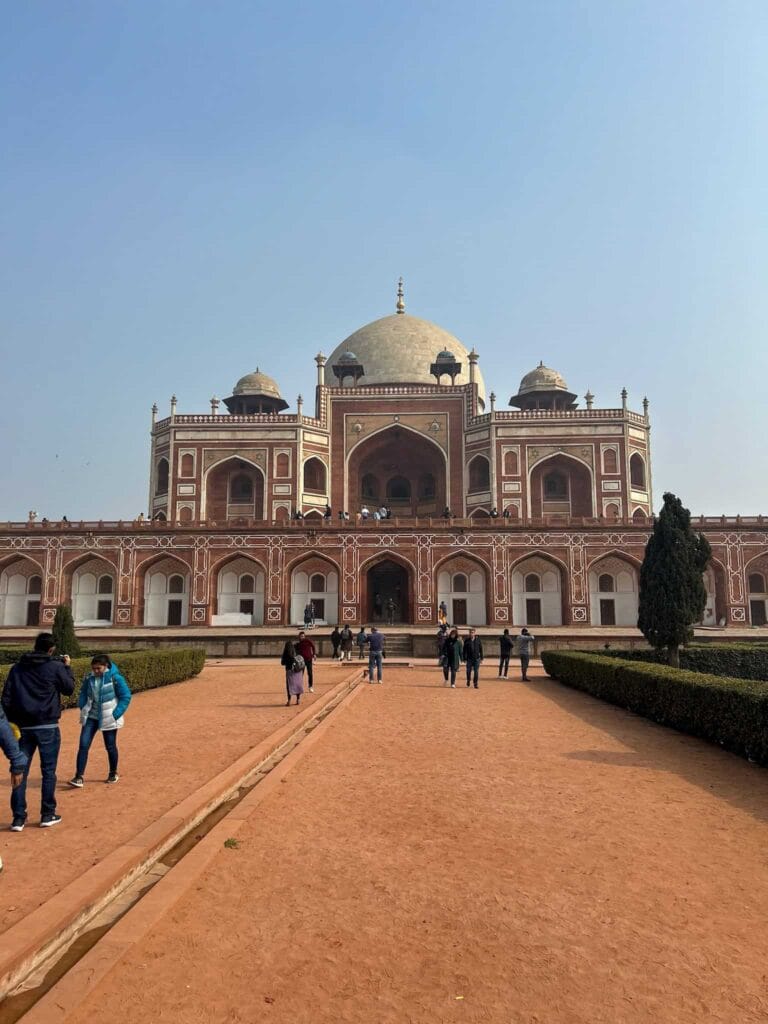
🏛️ Best sight: Humayun’s Tomb, the most underrated place in Delhi
💡 Top Tip: Start with Old Delhi on day one. It throws you in the deep end, but that is exactly what Delhi is
📅 Best time to visit: October to February
⚠️ Watch out for: Tuk-tuk drivers’ commission shops ‘scam
Day 1: Dive Into Old Delhi
Chandni Chowk
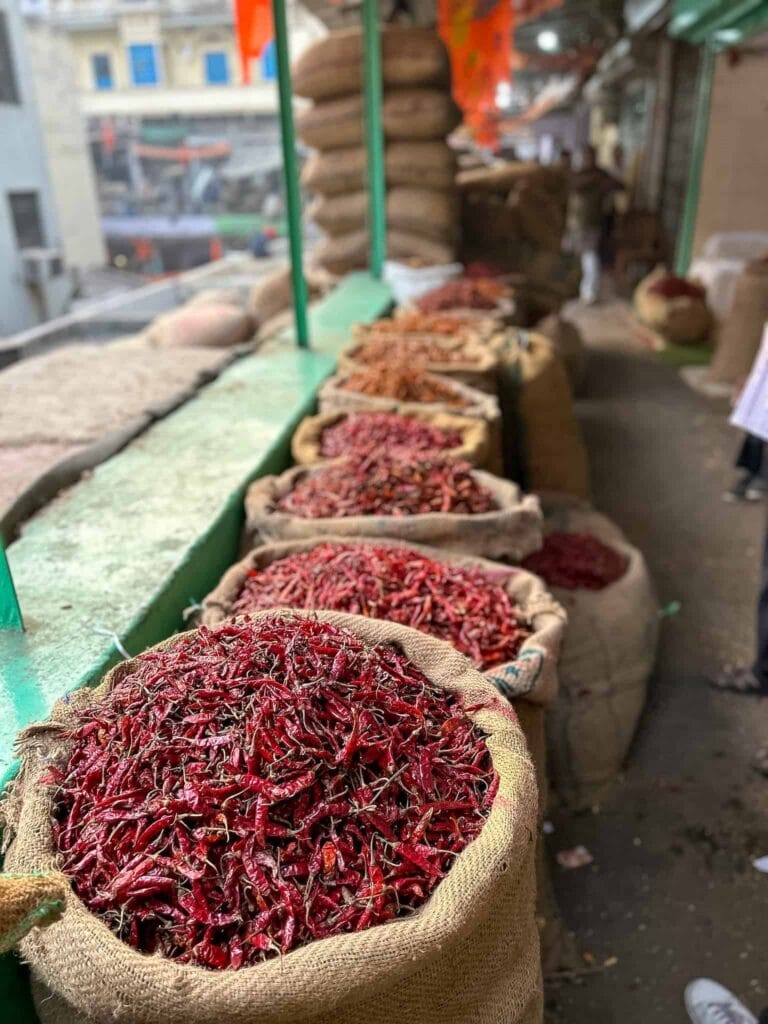
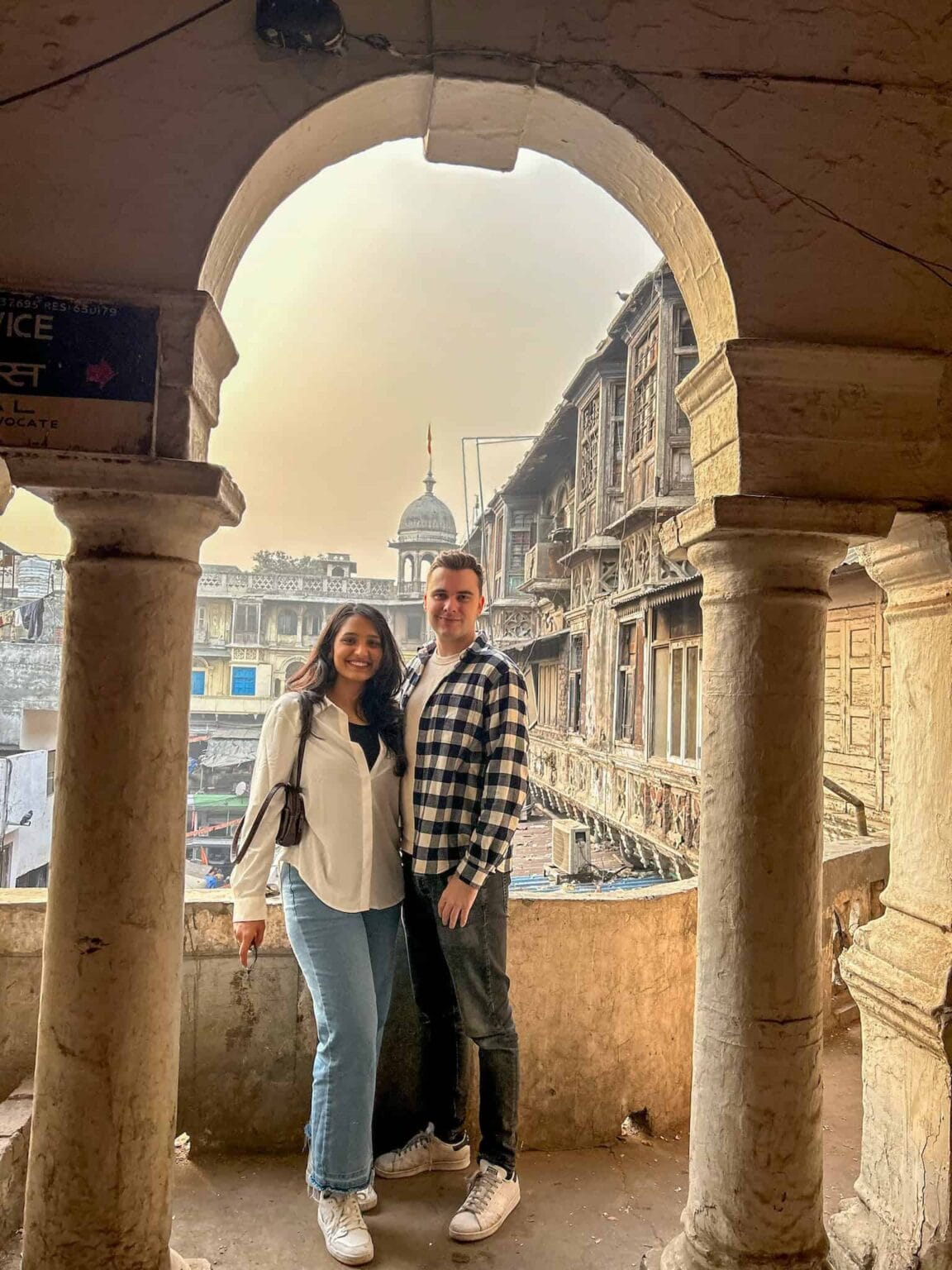
Start here, and start early. Chandni Chowk sits right in the heart of Old Delhi, the historical Mughal part of the city, and it is an assault on every sense you have, in the best possible way. Bright spices piled in market stalls, tuk-tuks honking from every direction, the smell of street food frying somewhere just around the corner. Colour, noise and life absolutely everywhere.
Take a rickshaw through the main stretch rather than trying to walk it. Your driver will know the good spots, the best photo opportunities and the right stalls to stop at. Give yourself an hour here just to take it all in. Don’t try to plan it too much. Chandni Chowk is more about the experience than any single sight.
For first-timers: if this is your introduction to India, it will feel like jumping into the deep end. That is supposed to happen. Go with it.
Tips:
- Go early, before the midday heat and crowds build
- Agree on a price with your rickshaw driver before you get on
- Keep your belongings close, especially bags and phones
Jama Masjid

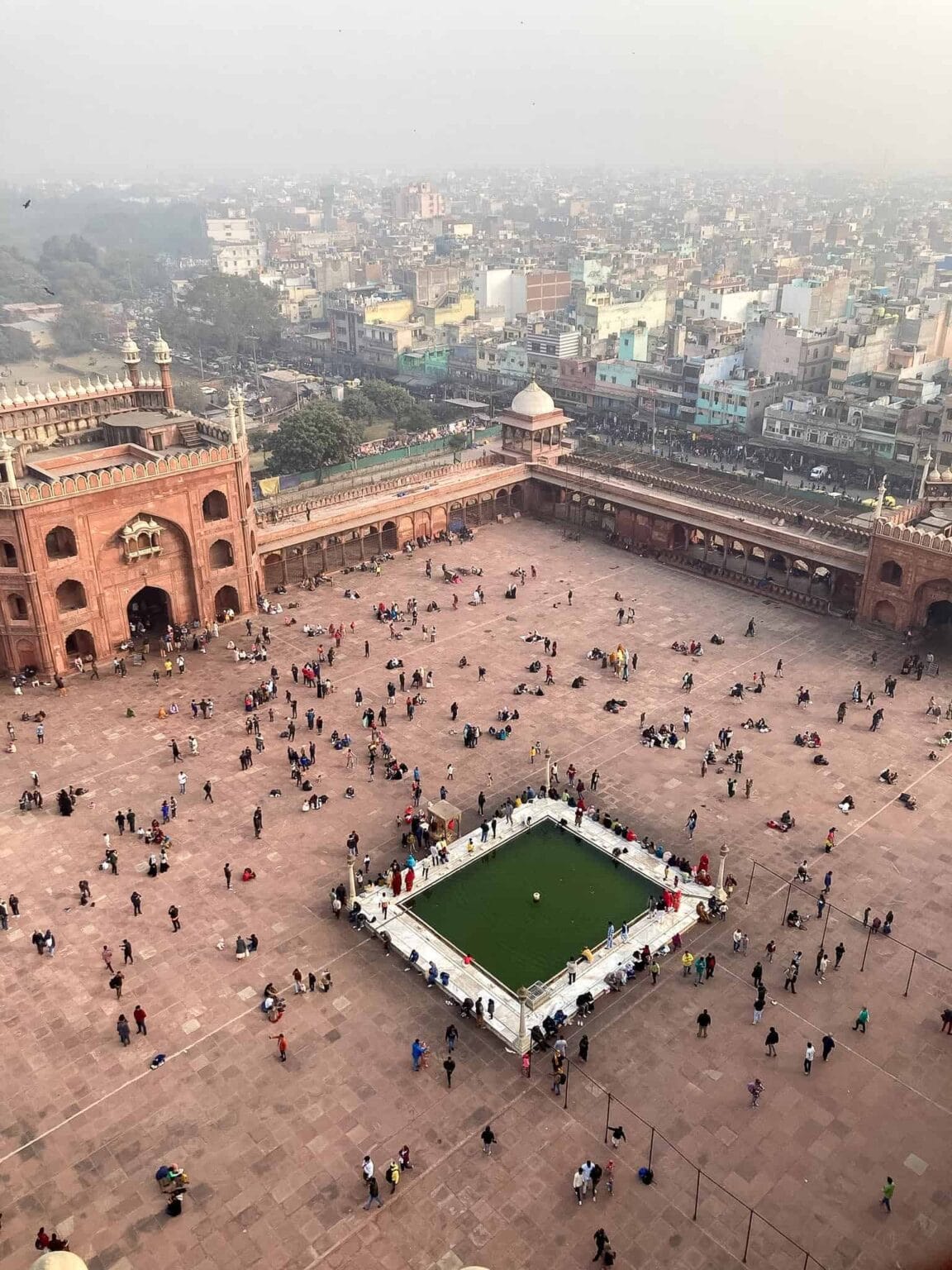
A short walk from Chandni Chowk, the Jama Masjid is one of the most impressive buildings in Delhi. Built in the 1640s by Mughal Emperor Shah Jahan, the same emperor who commissioned the Taj Mahal, it remains a fully functioning mosque today. That is precisely what makes it special. You are not visiting a preserved monument. You are walking into a building where people are praying, gathering and going about their daily lives. The contrast between the grand architecture and ordinary human activity within it is genuinely moving.
Climb the tower if you can for panoramic views across Delhi. In winter, expect a thin layer of smog sitting over the city. Atmospheric in its own way.
Tips:
- Dress modestly, shoulders, chest and legs covered. Women will need a headscarf, available to borrow at the entrance.
- Non-Muslims are welcome, but be respectful; this is an active place of worship
- Entry is free, and there is a small charge to climb the tower
Red Fort
A short tuk-tuk ride from Jama Masjid, the Red Fort’s vast sandstone walls were the centre of Mughal rule in India after the capital shifted from Agra to Delhi. Walking through the gardens, archways and bazaars inside, you get a real sense of the power and wealth of the empire that once operated from here.
We spent about two hours. Hiring a guide is worth it; there is a lot of history here that is not obvious without context. An audio guide works too if you prefer to go at your own pace.
Tips:
- Entry is approximately 35 rupees for Indian citizens, 600 rupees for foreigners
- Arrive at opening time to beat the crowds and the heat
- The evening sound and light show is popular if you want to return after dark
Day 2: New Delhi and Its Highlights
Humayun’s Tomb
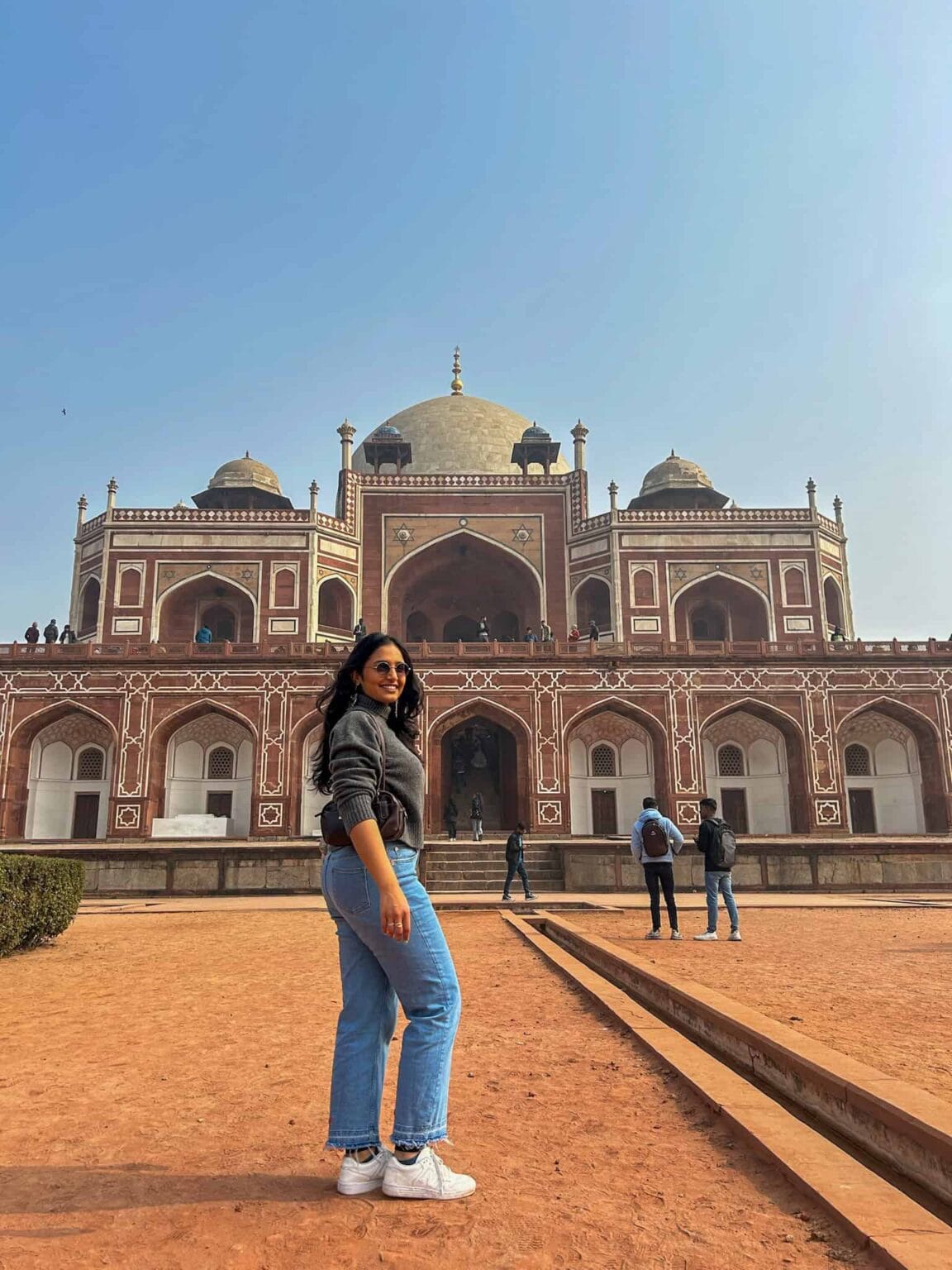
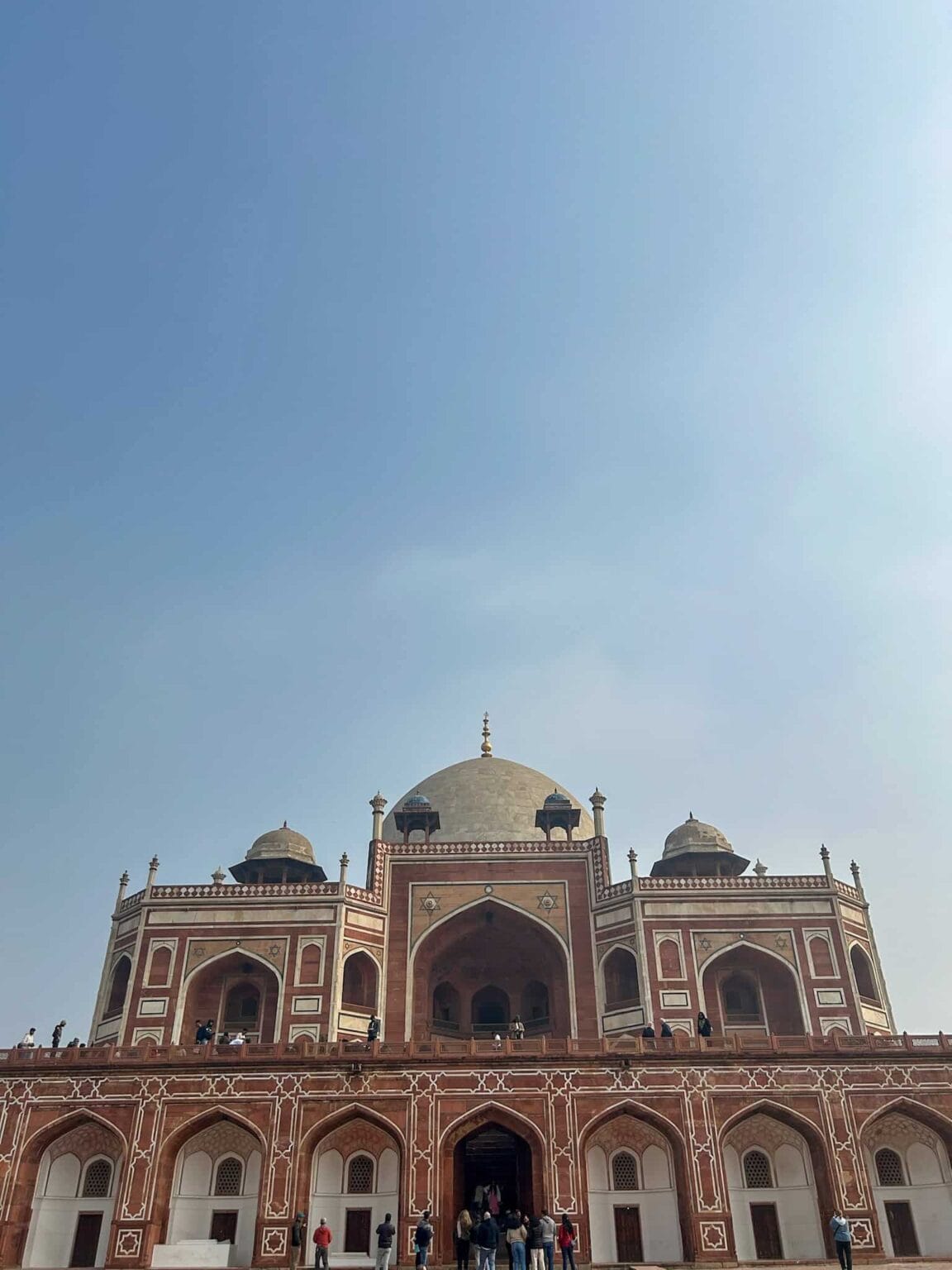
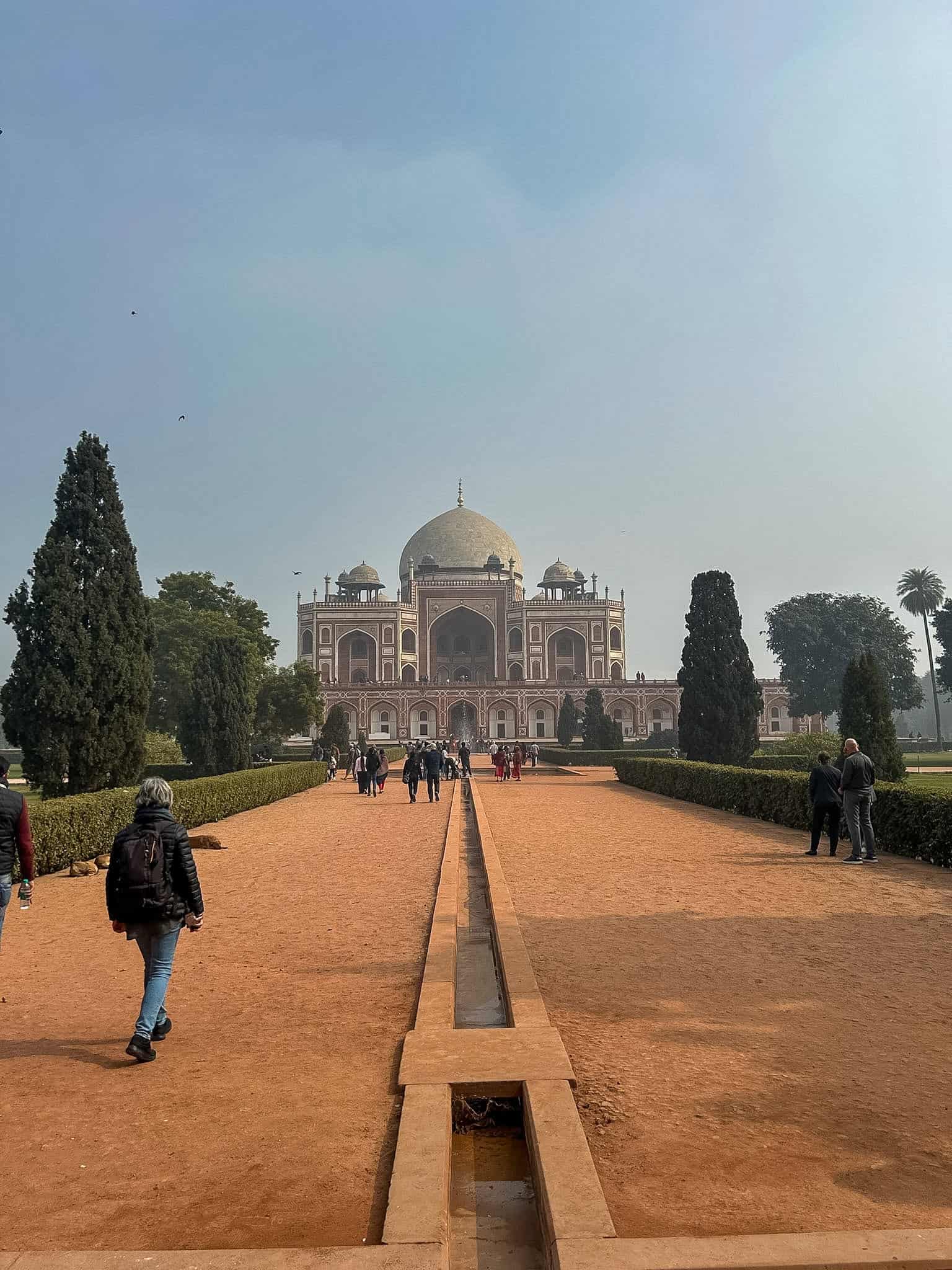
This was our favourite sight in all of Delhi. Honestly, one of the most underrated places in India.
Built as the grand resting place of Mughal Emperor Humayun, and now a UNESCO World Heritage Site, Humayun’s Tomb is widely considered the architectural predecessor of the Taj Mahal. Standing in front of it, you can absolutely see why. The scale is extraordinary. The sandstone and marble work is extraordinary. The whole thing is just extraordinary, and yet somehow it gets a fraction of the visitors that the Taj does.
What we loved beyond the building itself was the setting. The surrounding gardens are immaculate, green, calm and genuinely peaceful. After a full day in Old Delhi the day before, the contrast was almost jarring. It was quiet enough that you could actually stop and absorb it rather than just jostling for photos.
We used an audio guide on our phones and gave ourselves a couple of hours. Go in the morning before the heat builds.
Tips:
- Entry is approximately 40 rupees for Indian citizens, 600 rupees for foreigners
- Morning light is best for photos
- Combine with nearby Lodhi Garden if you have extra time, a beautiful green space a short walk away
Purana Qila (Old Fort)
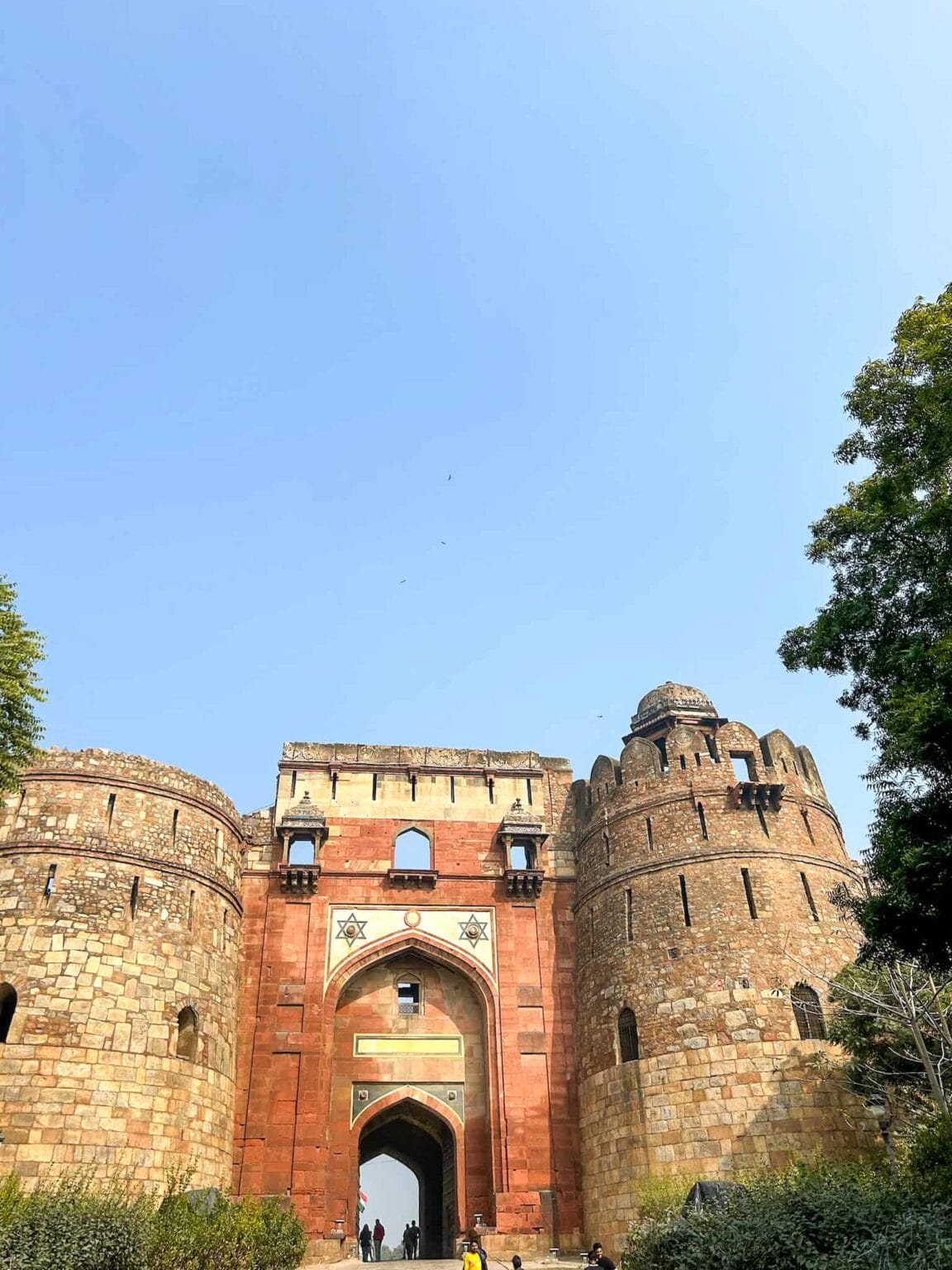
Purana Qila doesn’t get much attention in most Delhi guides, which is exactly why we liked it.
One of Delhi’s oldest forts, dating back to the 16th century, it doesn’t have quite as much to see inside as the Red Fort. But that’s almost beside the point. The grounds are green, spacious and genuinely peaceful, a world away from the noise and chaos that defines most of Delhi. We spent a relaxed hour wandering around and found ourselves sharing the space almost entirely with young Delhi couples, quietly sitting together away from the city. There’s something lovely about that, a centuries-old fort being used as a place of calm and solitude by the people who actually live here.
If you need a breather between Humayun’s Tomb and India Gate, this is the perfect stop.
Tips:
- Entry is approximately 20 rupees for Indian citizens, 300 rupees for foreigners
- An hour is plenty
- Worth combining with Humayun’s Tomb, as both are in the same part of the city
India Gate
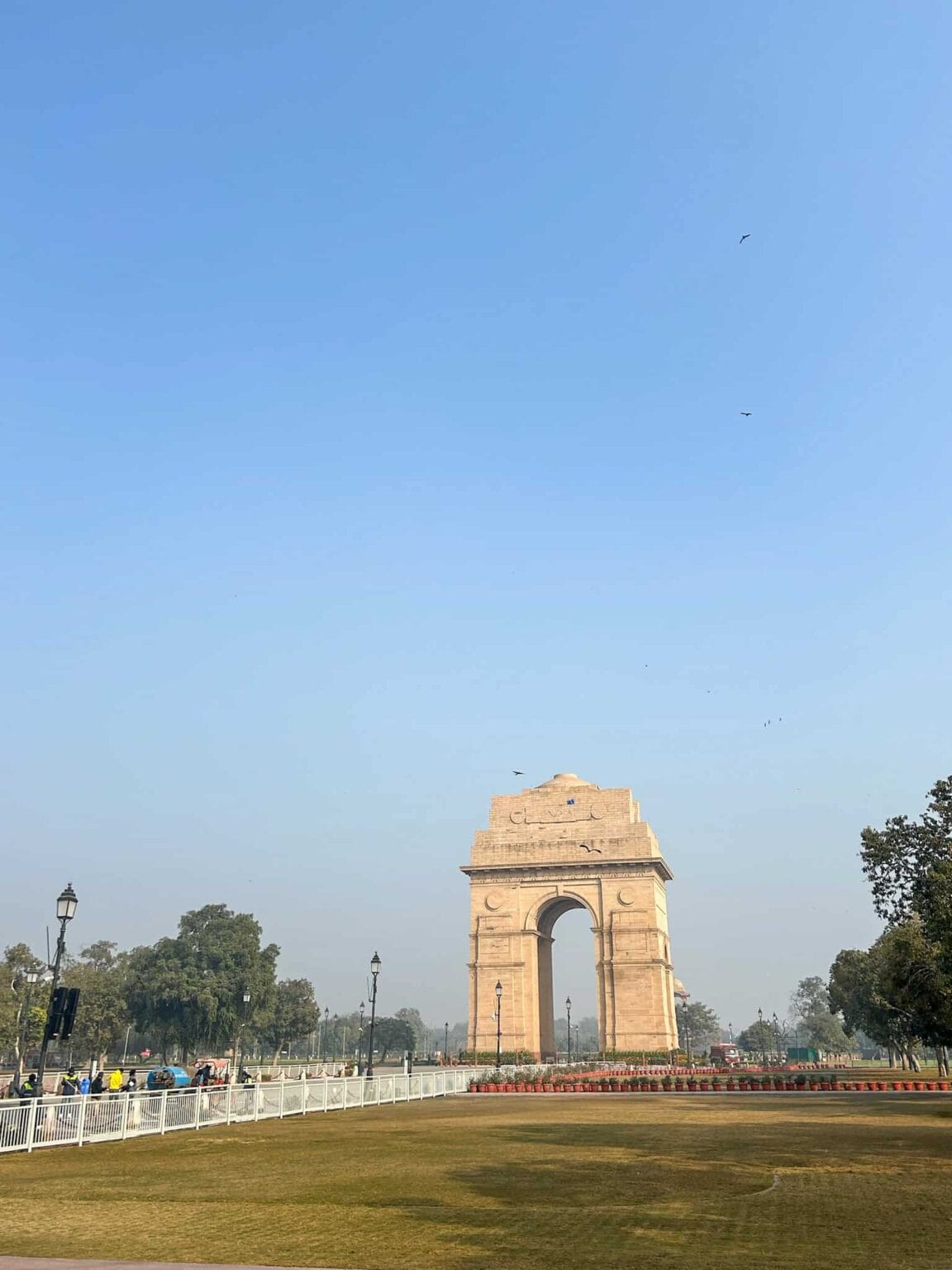
Delhi’s grand war memorial, built to commemorate those who lost their lives in World War One and the Afghan Wars, sits at the end of a long central boulevard that runs up towards the President’s House. Think of it as a slightly smaller Arc de Triomphe, but with significantly more ice cream vendors around it.
We visited on Republic Day, which meant the whole area was closed off for the military parade, and we couldn’t get close. Memorable in its own way, but if you want to walk right up to it, avoid 26th January.
Even from a distance, it is worth the stop. It represents a different chapter of Delhi’s history from the Mughal monuments, and spending time here gives you a broader sense of the city.
Qutub Minar
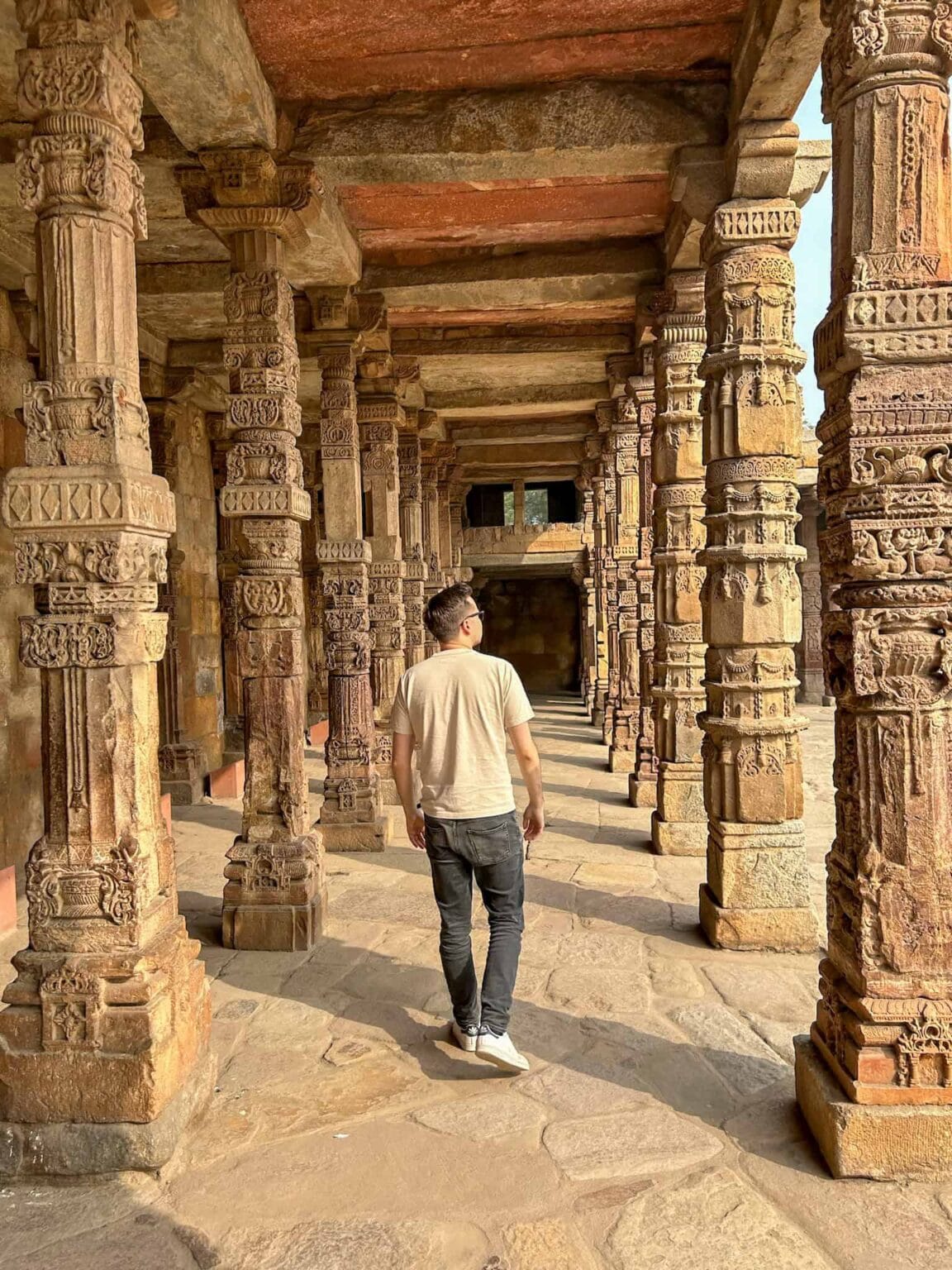
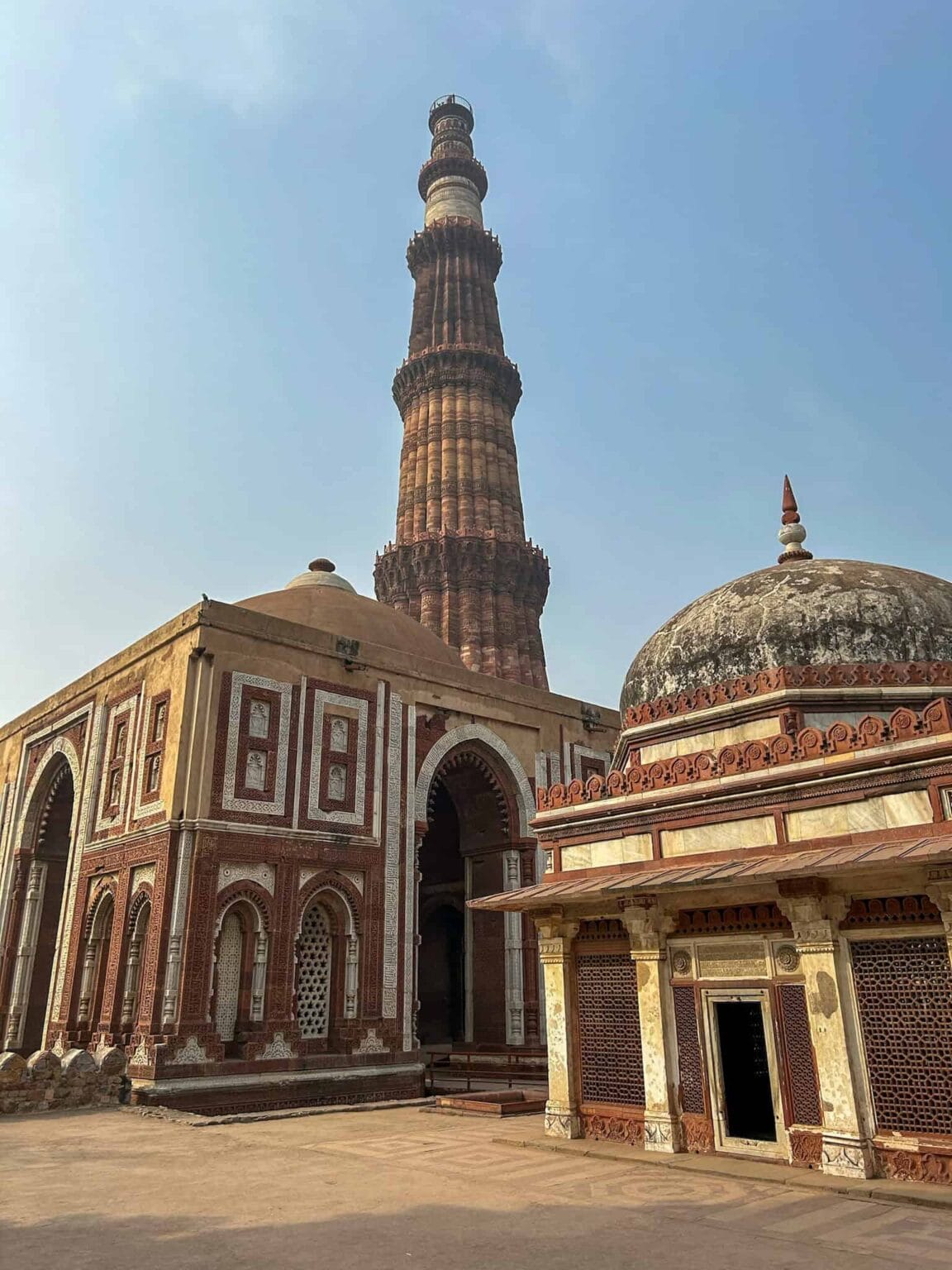
Located in South Delhi, a bit further from the other Day 2 sights, Qutub Minar is worth making the effort to get to.
At 240 feet, it is the tallest brick minaret in India, and the surrounding complex of ruins is impressive in its own right. You can no longer climb it, which is a shame, but the minaret itself is a stunning piece of architecture, and there is plenty to explore in the grounds around it.
What struck us most was the journey there. Driving down through South Delhi, you pass through a completely different part of the city from the tourist-heavy centre, greener, quieter, more residential. It is a good reminder of just how vast Delhi actually is.
Tips:
- Entry is approximately 40 rupees for Indian citizens, 600 rupees for foreigners
- Late afternoon is a good time to visit, the light is better for photos, and the heat has eased
- Combine with the nearby Mehrauli Archaeological Park if you have time to spare
Where to Eat in Delhi
Gulati’s
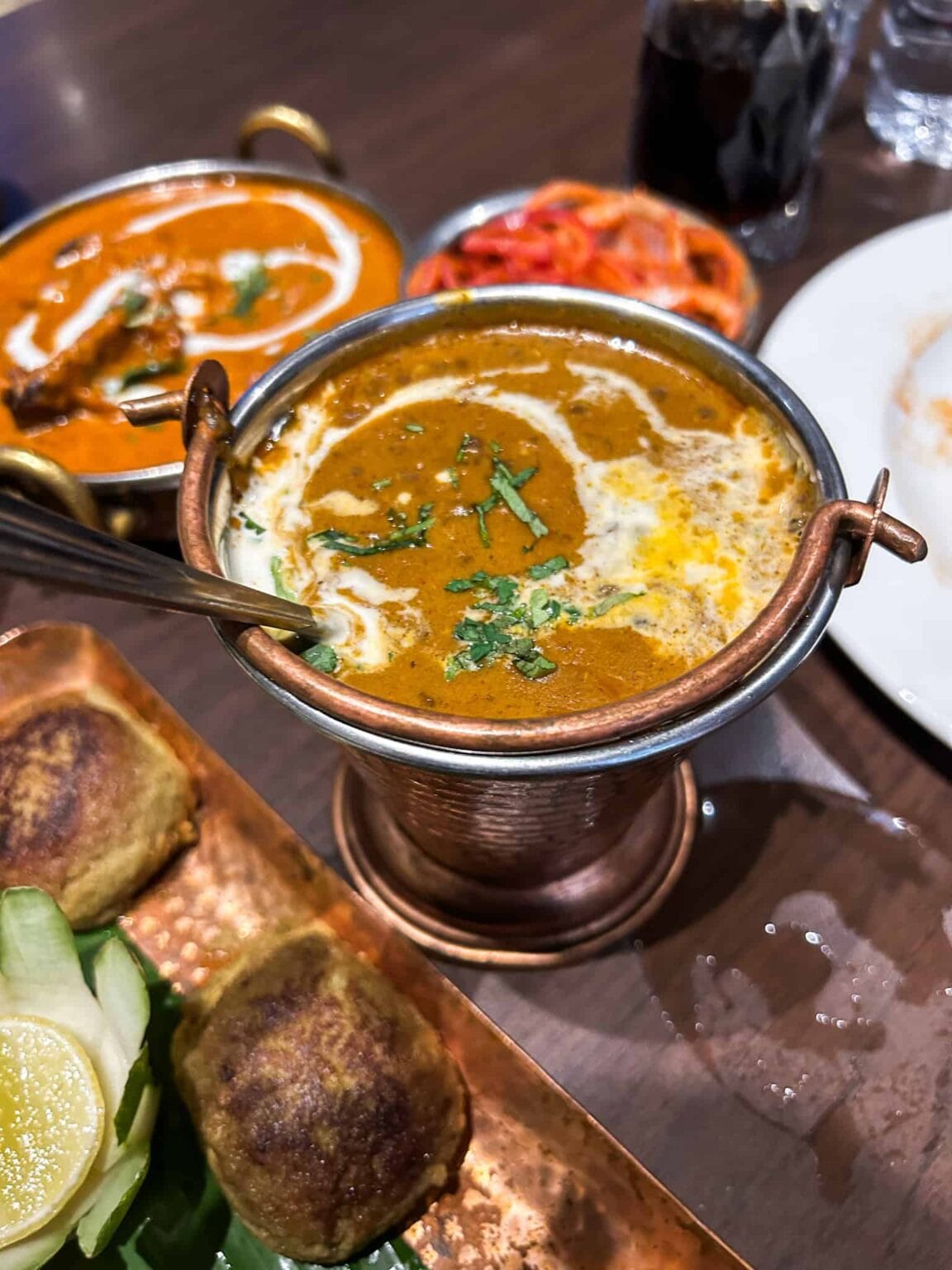
If you eat at one sit-down restaurant in Delhi, make it Gulati’s. It serves the kind of Mughal cuisine Delhi is famous for and does it properly.
We ordered three things. The Gulati kebabs were excellent. Butter chicken, which was nothing like the sweet version you get in Indian restaurants in the UK. This was rich, deeply savoury, almost smoky. It tasted like a completely different dish. And dal makhani, which was the highlight of the entire meal. Creamy, rich, utterly moreish. We talked about it for the rest of the trip.
You may have to wait for a table, but the area it sits in is pleasant enough to wander while you wait, and it is walkable from India Gate. Worth every minute.
For more on the food culture of this part of India, see our What to eat in Delhi and Agra guide.
An Evening at Khan Market
We spent an evening at Khan Market with some of Poorva’s cousins who live in Delhi, and it was one of the highlights of the whole trip. Khan Market is a smart, lively little area full of cafes, bars, restaurants and independent shops. Popular with Delhi’s young professional crowd. It felt completely different from the tourist trail.
We picked up kebabs, had some cake, and went for cocktails. Relaxed, easy, genuinely fun. If you want to see a side of Delhi that feels like the actual city rather than a sightseeing itinerary, spend an evening here.
Delhi Street Food
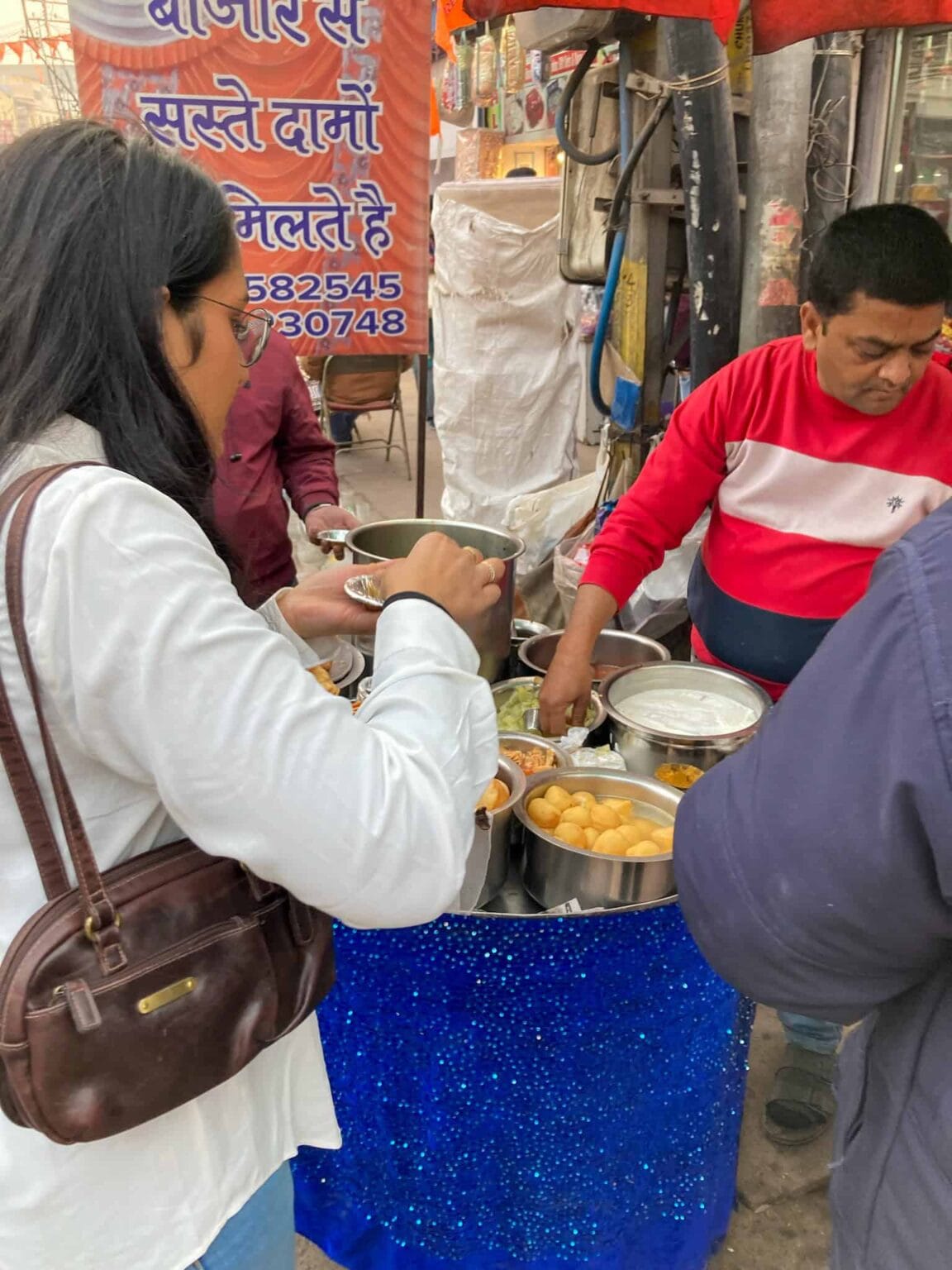
Poorva’s first priority in Chandni Chowk was tracking down pani puri, her favourite Indian street food and something she had genuinely missed since moving to London. She was delighted. I, on my very first day in India, made the sensible decision to watch.
Delhi street food is brilliant, but if it is your first time in India, your stomach needs time to adjust. We would suggest waiting until at least day two before diving in, and when you do, pick busy stalls with high turnover where the food is moving fast.
The McDonald’s Confession
We try McDonald’s in every country we visit. India’s version is genuinely interesting, no beef on the menu at all, replaced entirely with paneer and chicken alternatives. The peri peri fries shaker and the paneer burger were both better than expected. No judgment, please.
Where to Stay in Delhi
We stayed at Bloomrooms Janpath and would recommend it. Nothing flashy, but clean, comfortable and in a great location near Connaught Place. Good breakfast included. As a base for exploring the city, it does exactly what you need.
One firm recommendation: avoid Paharganj. It is a popular area for budget travellers, but it is loud, chaotic and not a pleasant place to base yourself. Spend a little more and stay near Connaught Place. You will not regret it.
Getting Around Delhi
We got around almost entirely by tuk-tuk booked through Uber, which is the easiest approach. You see the price upfront, no negotiation needed.
One thing to know: tuk-tuk drivers will often try to take you to souvenir shops or textile ‘factories’ where they earn commission. The approach is usually casual, a mention here and there while they’re taking you somewhere else. A firm, polite no is all it takes, and they drop it immediately. We did end up in one shop because our driver had been genuinely helpful all day and waited for us at multiple stops. It felt rude not to at least look. It was fine, just not something we needed.
We didn’t use the Delhi Metro, but it is a good option if you want to cover more of the city quickly. Clean, air-conditioned and easy to navigate.
Delhi Travel Tips
The pollution hits immediately. I found the first few hours genuinely difficult to breathe in, nothing serious, but noticeable. Poorva, who grew up here, found herself far more aware of it than she ever was as a child. After a day, you adjust. Just be prepared for it on arrival.
There are monkeys in the city. Particularly around older temple areas. They are fascinating to watch. Do not feed them or get too close.
Scams are common but manageable. The most frequent involves tuk-tuk drivers and commission shops, as above. Others include fake tourist offices near major monuments and drivers claiming your destination is closed today. Trust your instincts and do not follow anyone who approaches you unsolicited.
Republic Day is 26th January. The area around India Gate closes for the military parade. Worth watching if you happen to be there, but plan your sightseeing around it.
Best time to visit: October to February. We went in February and found cold mornings, warm afternoons, and manageable crowds. Avoid May and June when temperatures regularly exceed 45 degrees.
What to wear: Modest clothing is important, especially around Old Delhi and religious sites. See our full see our What to Wear in India as a female tourist guide for everything you need to know before you pack.
Staying safe: For female travellers in particular, read Poorva’s How to stay safe in India as a female tourist guide and official guidance e.g. UK Foreign Office India Travel Advice, before you go.
Getting to Delhi and Where to Go Next
Delhi is extremely well-connected internationally through Indira Gandhi International Airport.
Most visitors doing the Golden Triangle continue to Agra after Delhi to visit the Taj Mahal. It really is worth it and feels like one of those once-in-a-lifetime things to see if you have the time.
From Agra, most people head to Jaipur to complete the triangle. Our 3-day Jaipur itinerary covers everything you need. If you want to add a tiger safari to your Rajasthan trip, our Ranthambore tiger safari guide is worth reading.
For the best way to get between these cities without the stress, see our How to book trains in India as a foreign tourist guide.
FAQs
How many days do you need in Delhi?
Two full days covers the highlights comfortably. Three nights gives you a little more breathing room and is what we’d recommend if your schedule allows.
Is Delhi safe for tourists?
Yes, with sensible precautions. Be aware of common scams around major monuments and involving tuk-tuk drivers, keep belongings secure in crowded areas and use reputable transport booked through apps like Uber rather than hailing off the street.
Is Delhi safe for solo female travellers?
Delhi requires more care than many other cities. Make sure to dress appropriately, especially in less touristy areas, and stay alert in busy are
What is the best area to stay in Delhi?
Near Connaught Place in New Delhi. Central, well-connected and considerably more pleasant than popular budget areas like Paharganj.
Should I hire a guide in Delhi?
For the Red Fort and Humayun’s Tomb, yes. A guide adds real context to both. For Chandni Chowk, a knowledgeable rickshaw driver is enough.
Do I need a visa for India?
Most nationalities need an e-visa. See our India e-visa guide for a full step-by-step walkthrough.`
Delhi will test you. The pollution hits immediately, Old Delhi will overwhelm you within minutes, and at some point, a tuk-tuk driver may try to take you somewhere you don’t want to go. But push through all of that, and you get one of the most historically rich, culinarily brilliant and endlessly fascinating cities on earth.
Two days are enough to see it properly. Humayun’s Tomb and Jama Masjid alone make the trip worth it. And the dal makhani at Gulati’s will ruin every dal you eat for the rest of your life.
If you have visited Delhi or are planning a trip, we would love to hear from you in the comments below. Any questions about the 2 days in Delhi itinerary, tips we may have missed, or recommendations of your own, drop them below, and we will get back to you.