Ranthambore Tiger Safari: The Best Guide to Spotting Tigers in India in 2026
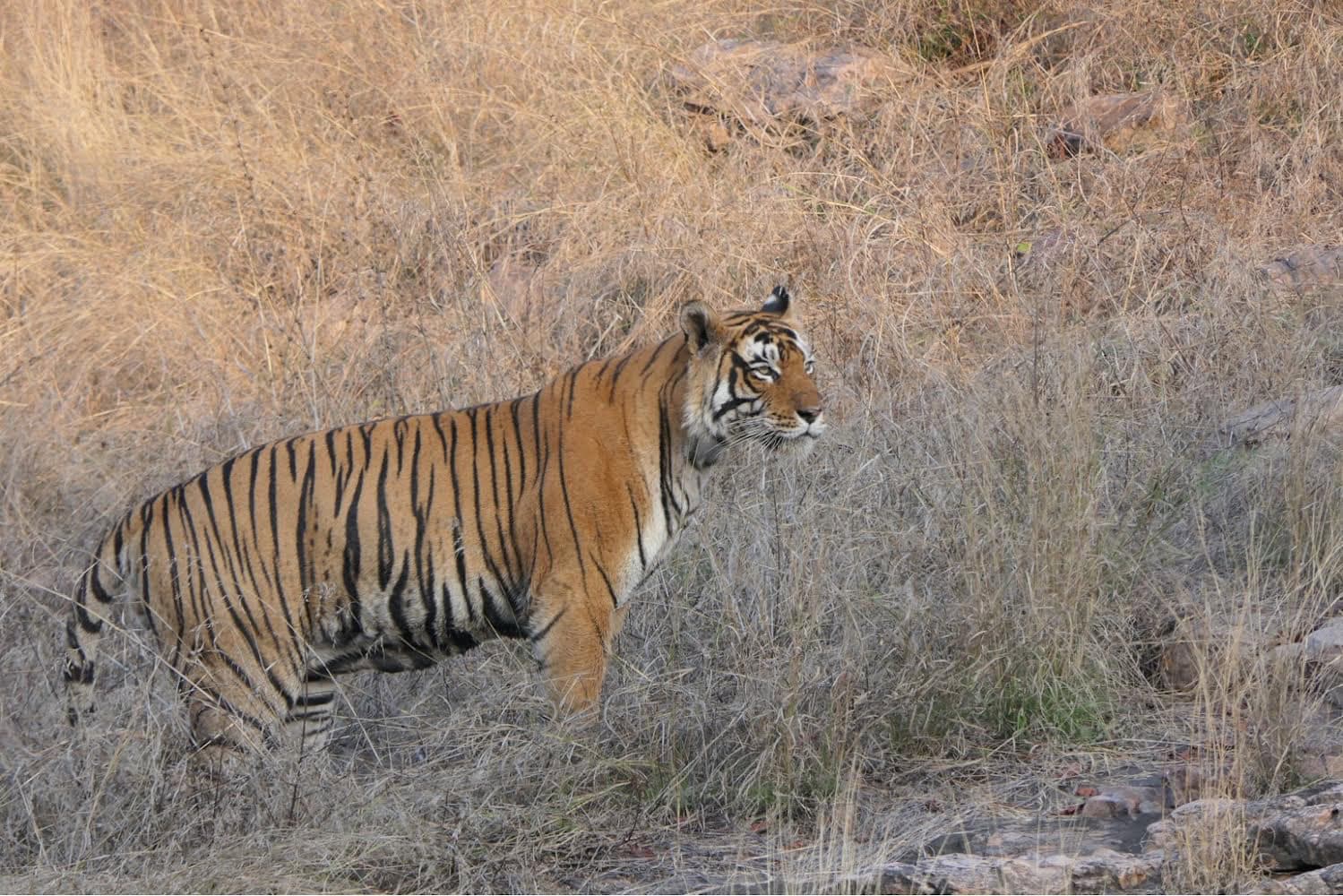
Seeing tigers in the wild has always been high on our bucket list. It’s on most people’s bucket list! And when planning an India trip, what better place to realise this dream of seeing the most majestic of all the big cats than on a Ranthambore tiger safari?
As soon as we decided we were going to travel through India, we were determined that we would at least give ourselves the chance to see one.
Ranthambore is considered one of the best places in India to see wild Bengal Tigers, and it fits perfectly into most Rajasthan itineraries which makes it incredibly popular with first-time visitors.
Of course, a tiger sighting is not guaranteed – they are in the wild after all. But that just adds to the sense of adventure. Scanning the forests, listening to calls of birds and animals and looking for a flash of orange in the undergrowth all just adds to the thrill if you do catch a glimpse of these beautiful creatures.
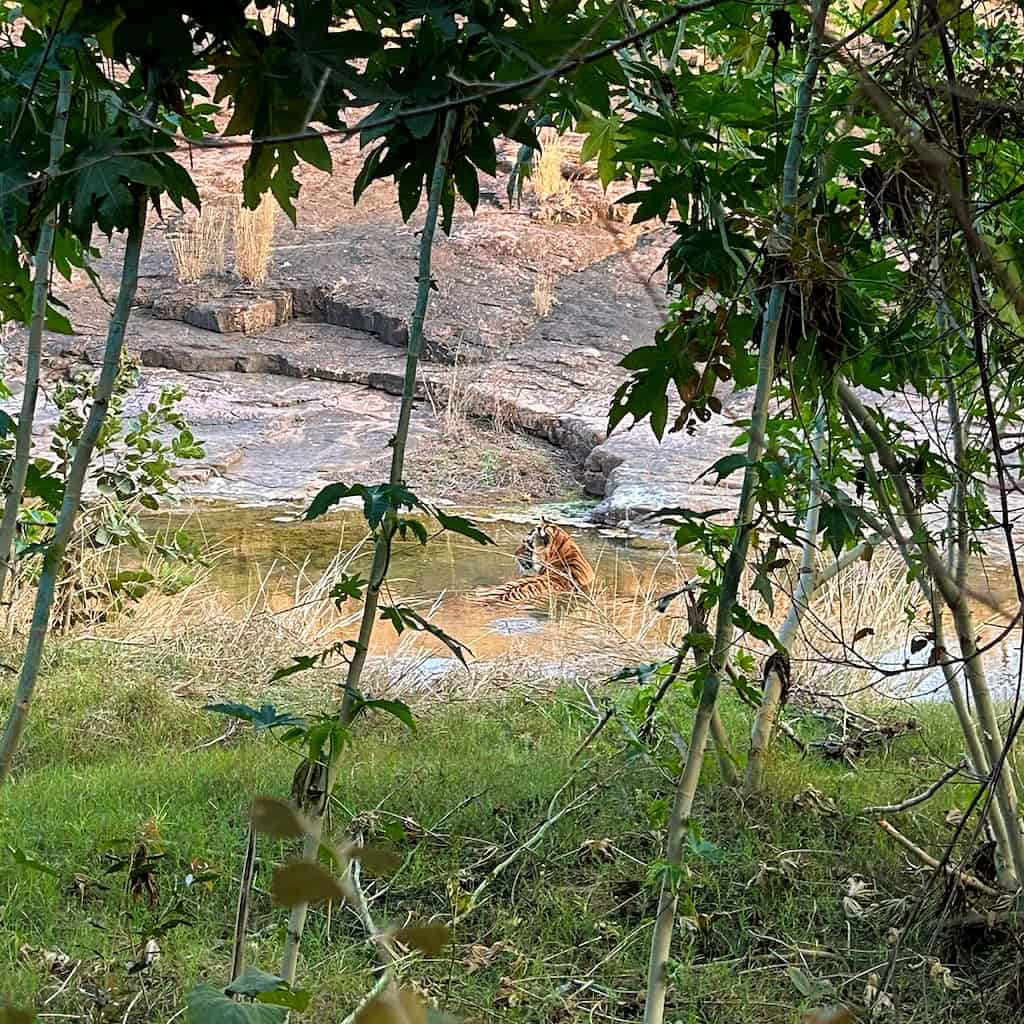
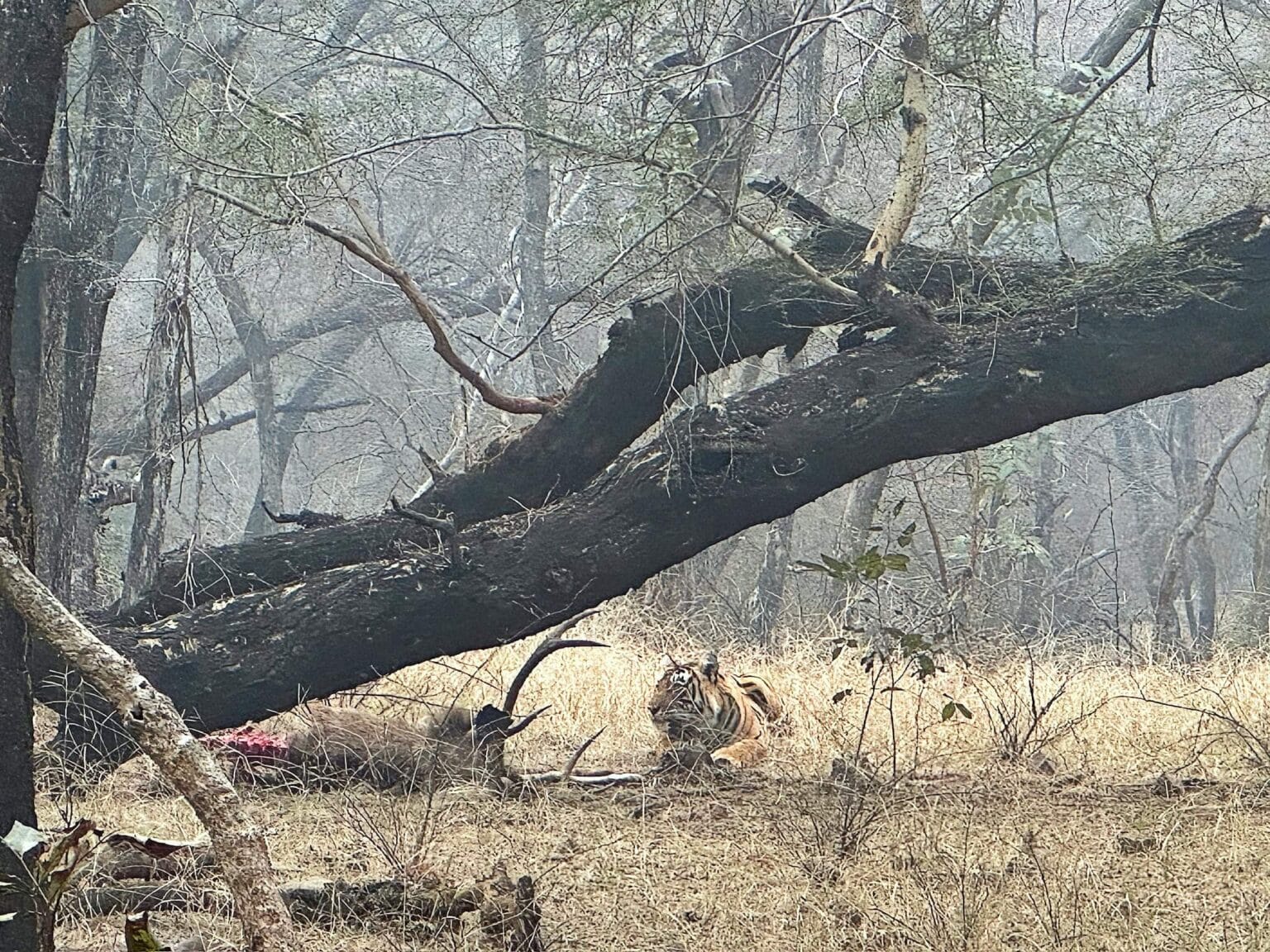
We were lucky enough to see two (yes, TWO!) Bengal Tigers in Ranthambore National Park. One female guarding its newly caught prey and one male cooling off in a watering hole. It was an unforgettable experience and we’re here to help you have yours too.
In this guide, we’ll talk you through all you need to know about booking a Ranthambore Tiger safari in India, including the best zones for tiger sightings and other personal tips to maximise your chances of spotting Tigers in India.
Ranthambore at a Glance
Short on time? Here are my recommendations for a few days in Ranthambore:
💎 Luxury hotel: Khem Villas
🏨 Mid-range hotel: The Tigress
🛌 Budget hotel: Hotel Tiger Haveli
🎫 Best Way to Book Safari: Pre-booked Jeep safari
🐅 Best Safari Zones: Zones 1, 2 & 4 for tiger sightings
🌅 Best safari plan: Do at least 2 (morning + afternoon)
📅 Best time to visit: October–March
🚆 Getting in/out: Train from Jaipur
Introduction to Ranthambore National Park
Where Is Ranthambore National Park Located?
Ranthambore is in the Indian state of Rajasthan, ‘the land of kings’. It’s just 2 hours from Jaipur, the state capital and similar distances from both Delhi and Agra. This makes it super convenient to fit into either a Rajasthan itinerary or a detour from a ‘Golden Triangle’ visit.
The nearest city to Ranthambore is Sawai Madhopur. It’s not a large city, and there isn’t much to do, but it is the perfect base for your Ranthambore safari experience. It also has a railway station with great connections to the surrounding cities.
Its accessibility is one of the main reasons Ranthambore is such a popular choice for a tiger safari in India.
Why is Ranthambore famous For Tiger Sightings?
Ranthambore is well known as one of the best places in India to spot tigers, partly this reflects its location and how easily it fits into a wider Rajasthan or Indian itinerary. But also, it’s because it is home to over 80 tigers, making it one of the most likely locations in India to see them, which, let’s be honest, is really why we’re all here.
This reputation has only been strengthened in recent years as the tiger population of Ranthambore National Park has more than doubled since 2005, when there were just 25 within its borders.
Brief History Of Ranthambore
The area now known as Ranthambore National Park was once the exclusive hunting grounds of the Maharajah (King) of Jaipur from the 17th Century until Indian independence in 1947.
It was once home to many more tigers and species and the forests of the area spanned many miles further. However, with human population growth and development in the region, the tigers became under threat and nearly went extinct.
In 1955, the first conservation here was established, and it matured into what it is today. With a growing tiger population and an abundance of other species and fauna, it is the best safari in India.
How To Maximise Your Chances Of Seeing Tigers In Ranthambore in 2026
Planning your safaris carefully makes a huge difference in Ranthambore, as sightings depend a lot on the zone, time of day and season.
Best Zones For Tiger Sightings in Ranthambore
⭐ Quick Picks: Best Tiger Zones At Ranthambore
🔥 Best overall zone: Zone 2
🌅 Best for morning sightings: Zone 1
🌿 Most scenic zone: Zone 4
🦌 Underrated but increasingly good: Zone 6
Ranthambore National Park is separated into 10 zones. Zones 1-5 are known as the best tiger spotting zones, with 6-10 as the buffer zones. However, from conversations with guides and regulars, this isn’t necessarily the case. We were told the best zones to see tigers in Ranthambore in recent years were 1, 2, 4 and 6.
We did our morning safari in zone 1. The cold, early morning fog sits heavily on this zone, giving it an eerie but also quite beautiful presence. It is a quieter zone and therefore you feel more in tune with nature – we barely saw another Jeep during the whole safari. There is known to be a tigress near the entrance of the zone, and we were lucky to see her just after she had taken down a large sambar deer!
Our afternoon safari was in zone 2. The scenery in this zone was stunning. You go right up against the imposing walls of Ranthambore Fort, see old ruins and stepwells, and most importantly, pass by many watering holes where tigers love to relax on a hot afternoon. It was in one of these that we saw a male Tiger cooling off before walking right past us back into the bushes. To be that up close and personal was a real privilege, and we hope you’ll have the same luck we had.
Morning or Afternoon Safari – Which Is Best for Tiger Sightings at Ranthambore?
We would recommend both as they give very different experiences, and you’ll want to go on at least 2 safaris to maximise your chances of spotting tigers at Ranthambore.
Morning safaris give a quieter, slightly spooky experience, especially in a less busy zone such as zone 1. The rising fog and mist with the sun barely up give it an otherworldly feel. If you’re the first ones in, you’ll have a great chance of spotting tigers and other wildlife as they will not have been disturbed or looking to hide away yet, particularly if they have been actively hunting at night.
Afternoon safaris give a slightly greater chance of spotting tigers. The fog will have lifted, and most likely a hot sunny day will make seeing them in the undergrowth far easier, with their bright orange coat appearing to shine. Also, the heat will mean they’ll be more likely to come out to cool off, so try to pick a zone with lots of watering holes, such as zones 2 and 3.
What Is The Best Time Of Year for a tiger safari at Ranthambore?
As with most of India, the winter months are the best time to visit, from October – March. During these months, the weather is cool, and your safari experience will be much more comfortable. The start of winter sees Ranthambore in lush greenery after the recent monsoons, but that can make tiger spotting more challenging than late winter.
In the summer months, especially April – June, Ranthambore is HOT! Especially the afternoon safari will be a challenge as temperatures can reach above 40 degrees Celsius. This heat can be positive for tiger sightings as they will come out in the open to cool off in watering holes.
During the monsoon months of July – September, the ‘best zones at Ranthambore’ 1-5 are closed, and it will be a challenge to see much wildlife – we do not recommend.
Jeep Or Canter Safari At Ranthambore?
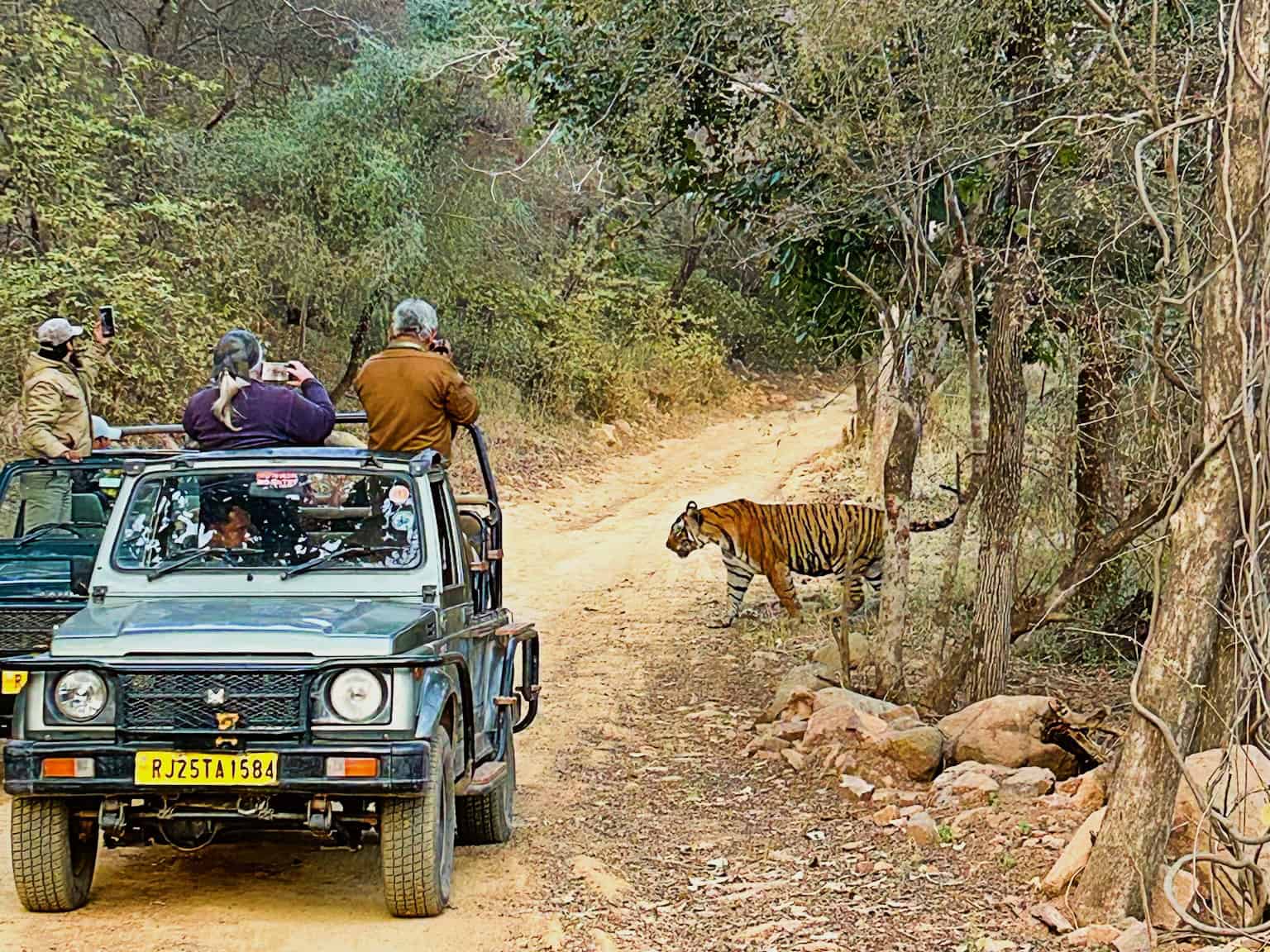
Jeep (AKA gypsy) is the only option worth considering unless a) you’re on a tight budget or b) they’re all sold out when you’re visiting.
Gypsies are 6-seater open-top Jeeps, and choosing one will massively increase your probability of seeing tigers. They can just go to places that the larger canter can’t get to, meaning you can cover much more of your zone and get closer to the wildlife. The only negative is they tend to be more expensive than the canter, but you get what you pay for.
Canters are essentially a 20-seater open-top truck. The extra height means you may see a little further, but that can be worse for wildlife photography due to the unrealistic angle. Also, canters tend to have large groups and families on board, who can sometimes be quite loud and rowdy, ruining your safari experience and, more importantly, scaring the animals away.
How To Book A Ranthambore Tiger Safari: Tips For A Smooth Experience
Booking Options: Online vs On Arrival vs Through Hotel
Online Booking: Great for Indians, not for foreigners
The official booking site is the cheapest place to book your Ranthambore safari. As it is the official site, there are no commission fees, and you can be sure it’s reliable. However, it isn’t the easiest site to navigate, and people sometimes report that they do not take non-Indian bank cards.
Alternatively, you can book through travel agencies such as Viator – Ranthambore, who will assist in booking your safari for you and will charge a small fee.
On Arrival: A Last Resort
If you haven’t booked in advance, then the good news is that the park keeps a limited number of seats back for on-the-day reservations. The bad news is that you’ll need to be up and at the Ranthambore Safari Booking Office 2-3 hours before the safari starts, which means for a morning safari, you’ll need to be there around 4am, I know I’d rather be asleep!
You are also likely to face big queues, especially at peak times such as weekends, and you won’t have as many options in terms of zones and transport type for your safari.
Book through your Hotel: The best option for most
This is what we did, and we feel it is clearly the best choice.
If you stay at a hotel that has good reviews and is used to accommodating safari travellers, this is the easiest option. After making your hotel reservation, just contact them and either give them the exact details of the safari you want (as we did) or take their expert local advice. They’ll book it for you and organise for the Jeep to pick you up right outside your accommodation, easy!
We booked ours through our hotel, Hotel Tiger Haveli, and it was so straightforward, we got exactly what we wanted. The surcharge was less than 10% over the official site, which felt well worth it for the convenience.
How Far In Advance To Book Your Ranthambore Tiger Safari
This really depends on when you plan to visit. Demand will be much higher in the winter months, especially December and early January. You may need to book at least a month in advance. We visited in late January, and many zones for our safaris were nearly fully booked for Jeep bookings.
In general, just try to book your safari as soon as your travel dates are confirmed.
How Much Does a Ranthambore Tiger Safari Cost
Safari costs vary depending on whether you choose a Jeep (Gypsy) or Canter, and whether you book online, through your hotel, or at the ticket office. Here are the approximate prices for 2026:
| Booking Method | Indian | Foreigner |
| Official Site | ₹1450 | ₹2750 |
| Ticket Office | ₹1450 | ₹2750 |
| Through Hotel | ₹2000 | ₹3200 |
| Booking Method | Indian | Foreigner |
| Official Site | ₹900 | ₹2200 |
| Ticket Office | ₹900 | ₹2200 |
| Through Hotel | ₹1200 | ₹2500 |
Accommodation Options Near Ranthambore National Park
💸 Budget – Hotel Tiger haveli (Perfect safari base)
Hotel Tiger Haveli is our top budget pick in Ranthambore – simple, friendly, and unbeatable for convenience.
Why we love it:
⭐ Jeep safari pick-up and drop-off right at the door
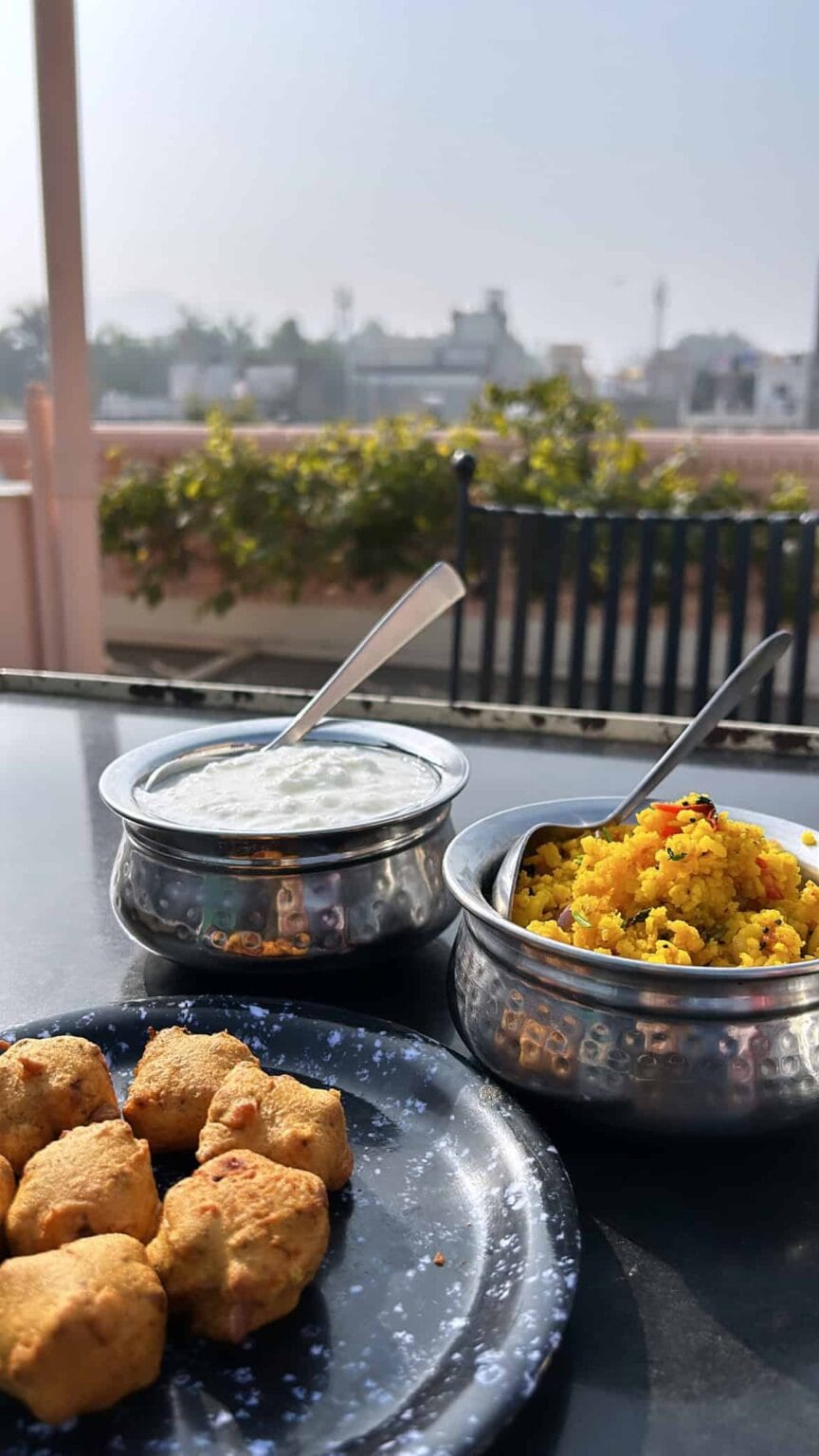
⭐ Lovely rooftop terrace serving tasty local food
⭐ Located in Sawai Madhopur, just 5 minutes from the railway station
Perfect for: Budget travellers, first-time safari visitors
Typical price: ₹2000 per night
🏨 Mid-Range – The Tigress (Stylish resort next to park entrance)
The Tigress is a beautiful resort that makes your Ranthambore stay feel relaxing and elevated.
Why we love it:
⭐ Fantastic location right by the National Park
⭐ Nightly cultural performances and an on-site artisan shop
⭐ Pool + gym, perfect for downtime between safaris
Perfect for: Couples, families, travellers wanting comfort + convenience
Typical price: ₹15000 per night
👑 Luxury – Luxury – Khem Villas (Eco-luxury retreat in nature)
Khem Villas is the most magical place to stay in Ranthambore — a luxury jungle retreat where wildlife roams freely.
Why we love it:
⭐ We saw deer, monkeys and exotic birds just driving in
⭐ Stunning eco-friendly accommodation (tents, cottages, villas with jacuzzis)
⭐ Blends nature, peace and luxury better than anywhere else in the region
Perfect for: Honeymooners, luxury travellers, nature lovers
Typical price: ₹50000 per night
How To Get To Ranthambore National Park
No matter where you are coming from, the train is normally the best way to get to Ranthambore.
Sawai Madhopur is such a well-connected station with direct trains to Delhi, Jaipur, Agra and even Mumbai (although you’re probably better off flying to Delhi than taking on the 15-hour journey).
For all of the aforementioned surrounding cities, you can expect journeys of less than 4 hours and multiple trains per day to choose from.
For help deciding the right train and class for you and booking your tickets, follow our Indian Train Guide.
Where To Travel Next After Ranthambore
Assuming you may have already covered Delhi and Agra before you arrived here, we suggest exploring more of the incredible state of Rajasthan. Whether you want to see the ‘Venice of the East’ in Udaipur, the ‘Pink City’ of Jaipur or experience a different kind of safari in the desert fort city of Jaisalmer, you can read more in our 7-day Rajasthan Itinerary Guide.
In terms of the best place to travel to immediately, Udaipur is where we went next. You can catch an overnight train from Sawai Madhopur, so you’ll arrive in the city around 7am, perfect to start exploring. You can read our 2-Day Itinerary for Udaipur to help you get started
Frequently Asked Questions
What Zones are best for Spotting Tigers at Ranthambore?
Zones 1, 2 and 4 give you the best chance of seeing tigers at Ranthambore.
How many Ranthambore safaris should I book?
At least 2, a morning and an afternoon. If you can stay a second day, then that’s even better, as many people do not see any on their first try.
How far in advance to book a Ranthambore tiger safari?
Aim to book at least a month in advance if planning a visit in December or January. Otherwise, at least 2 weeks should be sufficient.
What to wear for a Ranthambore tiger safari?
Morning safaris can be cold, especially in winter. Bring a thick coat and even a hat and a scarf if you have them. Afternoon safaris are much warmer, so you may want to change between the two.
Women may want to wear a sports bra as the ride can be bumpy, especially on the road to the national park.
Is a Ranthambore tiger safari safe?
Yes. The guides are experienced and have been operating for years. The Tigers and other wildlife are used to human interaction and have never attacked a tourist, so they are unlikely to be of any concern.
Of course, they are dangerous creatures, so follow the guide’s instructions and stay in the vehicle at all times.
What are some other things to do near Ranthambore?
Ranthambore Fort is a UNESCO World Heritage site and is worth visiting to learn about the area’s history and enjoy vast views across the National Park.
Is a Ranthambore tiger safari worth it?
Absolutely! It’s one of the best places in India to spot tigers.
It was a real highlight of our India trip and an experience we’ll never forget.
How likely am I to see a tiger in Ranthambore?
There are never any guarantees, but Ranthambore has a strong reputation for sightings thanks to its healthy tiger population.
Have you been on a Ranthambore Tiger Safari? Or seen tigers in the wild elsewhere? Let us know in the comments below.