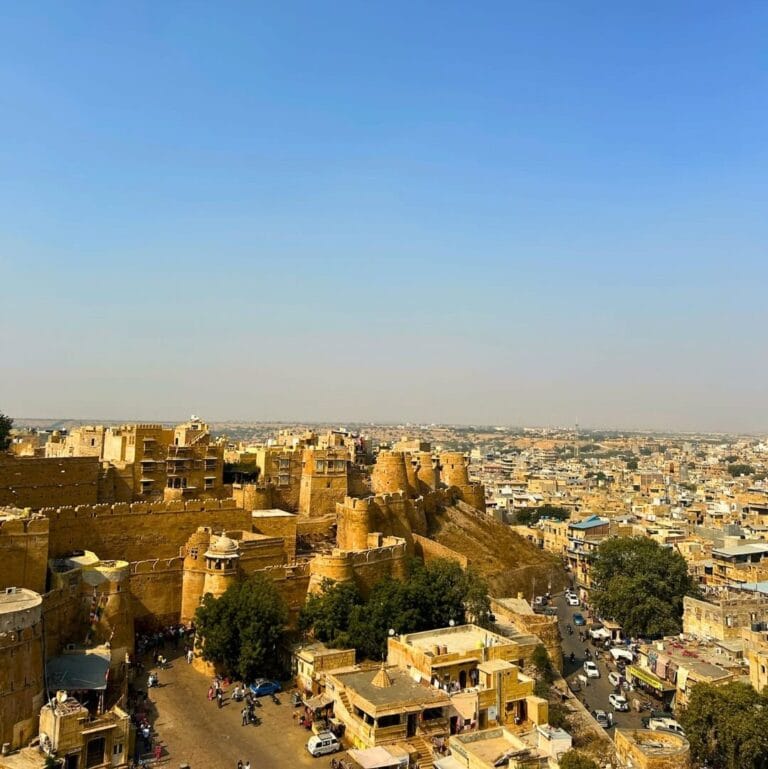
Agra Itinerary: How to Visit the Taj Mahal (Sunrise Tips, Scams to Avoid & What Else to See)

Agra is one of those cities that most travellers don’t fall in love with, but they never forget.
It isn’t the cleanest or prettiest city in India. It can feel chaotic, dusty, and overwhelming at times. Yet people travel from every corner of the globe for one reason: the Taj Mahal.
And when you finally stand in front of it, you understand why.
In this Agra itinerary, we share exactly how to visit the Taj Mahal, the best time to go (including our foggy sunrise experience), entry prices, scams to watch out for, and what else to see in Agra beyond the world’s most famous monument.
Is Agra Worth Visiting?
If you are travelling the Golden Triangle (Delhi, Agra, Jaipur), then yes, absolutely.
Even if you are not doing the full route, the Taj Mahal alone justifies a stop. But Agra is more than a single building. Between the Taj, Agra Fort, Mughal history, and incredibly tasty food, there is enough here to comfortably fill one or two days.
We stayed for two nights, and we recommend it if you can. It gives you flexibility, with two attempts at seeing the Taj Mahal at sunrise, which, as we learned, can be unpredictable in winter.
Visiting the Taj Mahal: What It’s Really Like
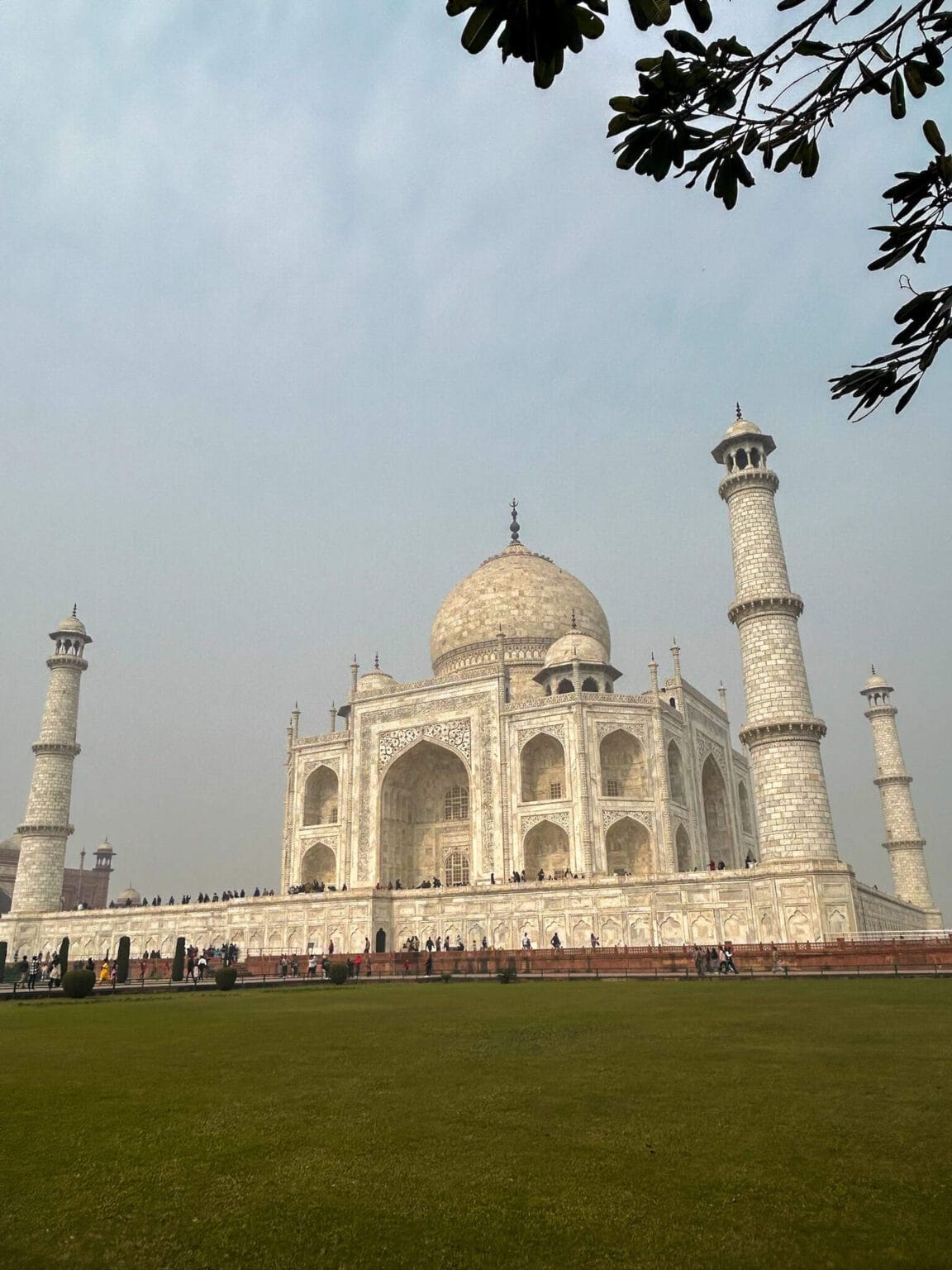
The Taj Mahal is one of those places you have seen a thousand times in photographs. You almost feel immune to it.
Then you walk through the main gate.
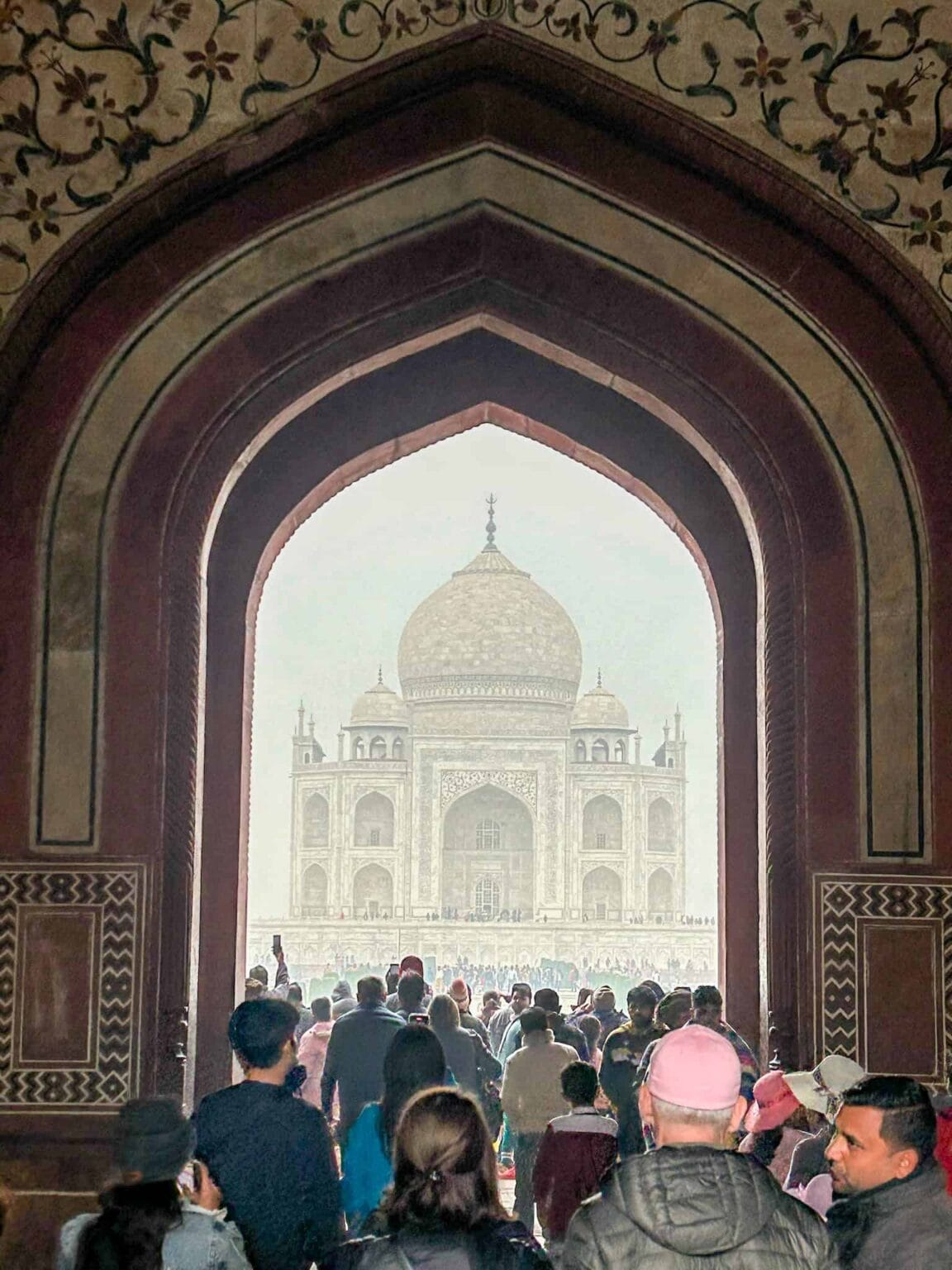
The archway frames it perfectly, like a painting. The symmetry is almost unreal. The white marble seems to glow, even when the sun isn’t shining bright like when we saw it. It genuinely stops you in your tracks.
It is romantic, grand, and surprisingly peaceful once you step slightly away from the main paths and just take a moment in awe of this Wonder of the World.
What is the Best time to visit the Taj Mahal?

In most cases, sunrise is the best time to see the Taj Mahal to get the best experience.
Sunrise is cooler, quieter, and softer in colour. The marble shifts from pale pink to bright white as the sun rises. By mid-morning, the crowds grow thicker, and the heat starts to build.
However, unfortunately, in the winter months (November to March), across all of North India and especially in Agra, you get a lot of thick fog/smog in the mornings, which can ruin your view of the Taj Mahal.
We visited in February and arrived just before sunrise, excited for that classic golden glow. Instead, we could barely see the Taj at all. It was completely hidden behind thick fog.
At first, it was genuinely disappointing. We came back at lunch time, and the fog was still thick, and it didn’t clear for the rest of the day.
As we were staying two nights in Agra, we were able to try again the following morning. The second day was much clearer. Not perfectly crisp, but clear enough for the Taj to slowly emerge from the mist. In a strange way, that made it even more magical.
If you are visiting between November and February, consider staying two nights. Fog can obscure the Taj until lunch time or even all day if you are unlucky. In warmer months, sunrise is still best, but visibility is usually clearer.
Taj Mahal Entry Fees (Foreigners vs Indian Citizens)
Entry prices differ significantly:
- Indian citizens: approximately ₹50
- Foreign tourists: approximately ₹1100
- Additional ₹200 to enter the inner mausoleum chamber
It is a noticeable difference, but for one of the Seven Wonders of the World, it still feels worth it.
Tickets can be purchased online or at the gate. Arriving early makes everything smoother.
Security is strict. Large bags, food, and certain items are not allowed inside, so travel light if possible.
Taj Mahal Photographers & Guide Scams: What to Watch For
Before you reach the entrance, you will almost certainly be approached by:
- “Official” guides
- Photographers
- People offering shortcuts or faster entry
Some are legitimate. Some are simply persistent. A few will try to overcharge.
A polite but firm “no” works well.
If you want a guide, ensure they have an official badge and agree on a price before starting. A good guide can explain the intricate marble inlay work and Mughal history, but it is not essential.
There are also photographers who know every classic Taj pose. If you want those perfectly framed shots, it can be worth it.
Our photographer tried to scam us by saying we had to purchase every photo they took, and they just clicked as many as possible, even without our permission. Agree on a set price upfront, and you should be fine.
What is it like inside the Taj Mahal?

Most visitors head straight down the central walkway toward the reflecting pool and the famous ‘Diana bench’. But it does get so busy here.
But what surprised us most was how calm it felt just a few steps off-centre. The side angles are equally beautiful and far less crowded.
Up close, the marble detail is astonishing. Amazingly, the floral designs are not painted; they are inlaid with semi-precious stones, a level of luxury we didn’t know about and somehow elevated how impressive we found it.
Inside the mausoleum chamber, it is darker and more crowded. Photography is not allowed inside. The tombs visible are symbolic, as the real graves lie beneath.
Agra Fort: The Underrated Highlight
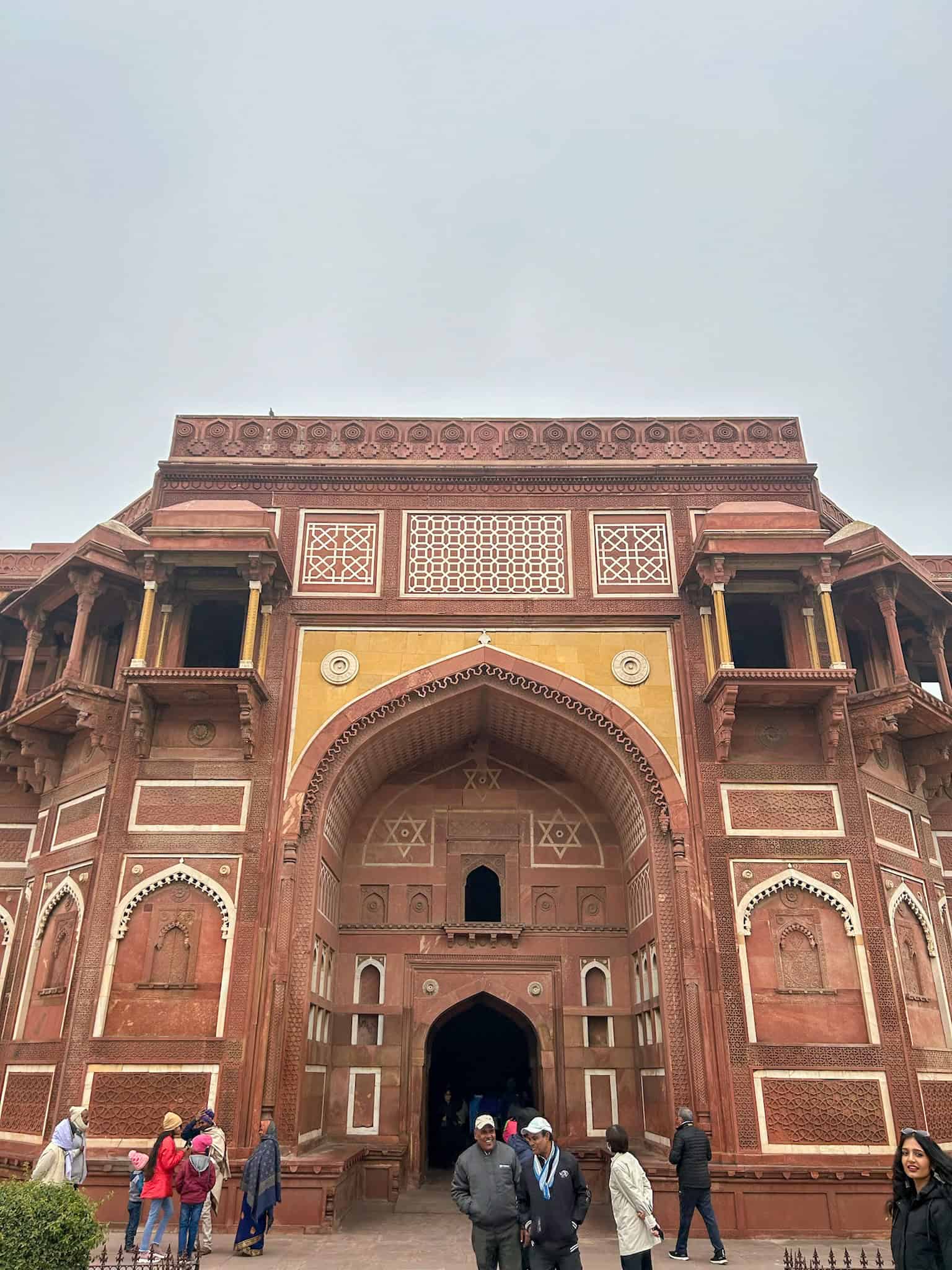
Often overshadowed by the Taj, Agra Fort is absolutely worth your time during your Agra trip.
Built primarily of red sandstone, with sections of white marble added later, it feels like a bridge between Delhi’s Red Fort and the Taj Mahal itself.
This is where Shah Jahan, the emperor who commissioned the Taj Mahal, was imprisoned by his own son. From his quarters, there is a clear view of the Taj in the distance, one of the most poignant and beautiful perspectives in all of Agra.
We found Agra Fort less crowded and more immersive than the Taj.
There is space to explore, photograph, and it has plenty of interesting history.
A guide can be helpful here, especially for understanding the succession struggles of the Mughal empire.
Should You Visit Fatehpur Sikri?
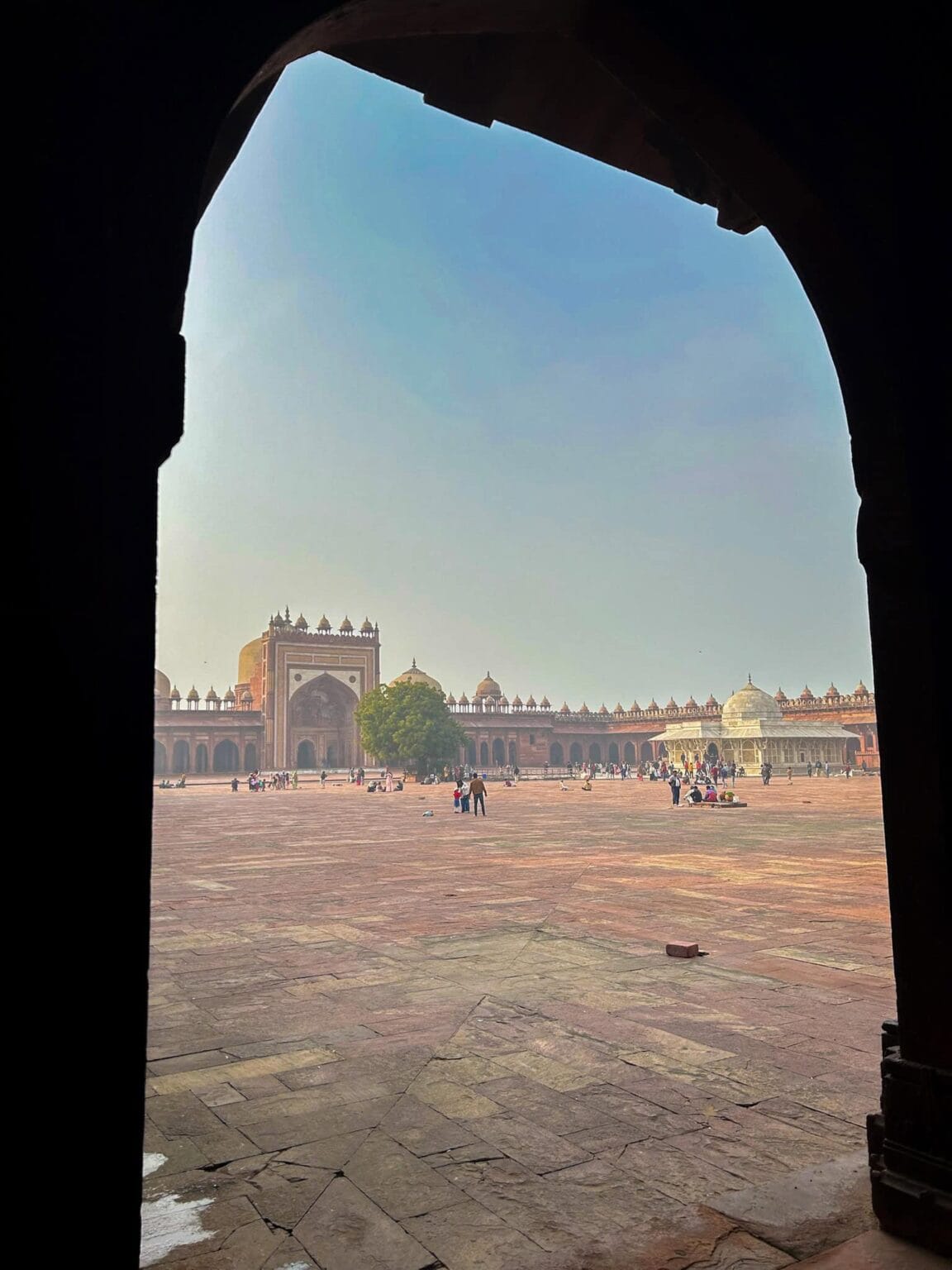
If you are travelling onward to Jaipur, Fatehpur Sikri makes an excellent stop en route.
This abandoned Mughal capital is about an hour from Agra and feels dramatically different from both the Taj and Agra Fort. Vast courtyards, intricate gateways, and a haunting sense of emptiness make it one of the most atmospheric places in North India.
We 100% recommend visiting it as part of a driver transfer between Agra and Jaipur or even just as an extra trip from Agra itself. Just ensure you give yourself at least half a day to explore it.
Where to Eat in Agra (With Taj Mahal Views)
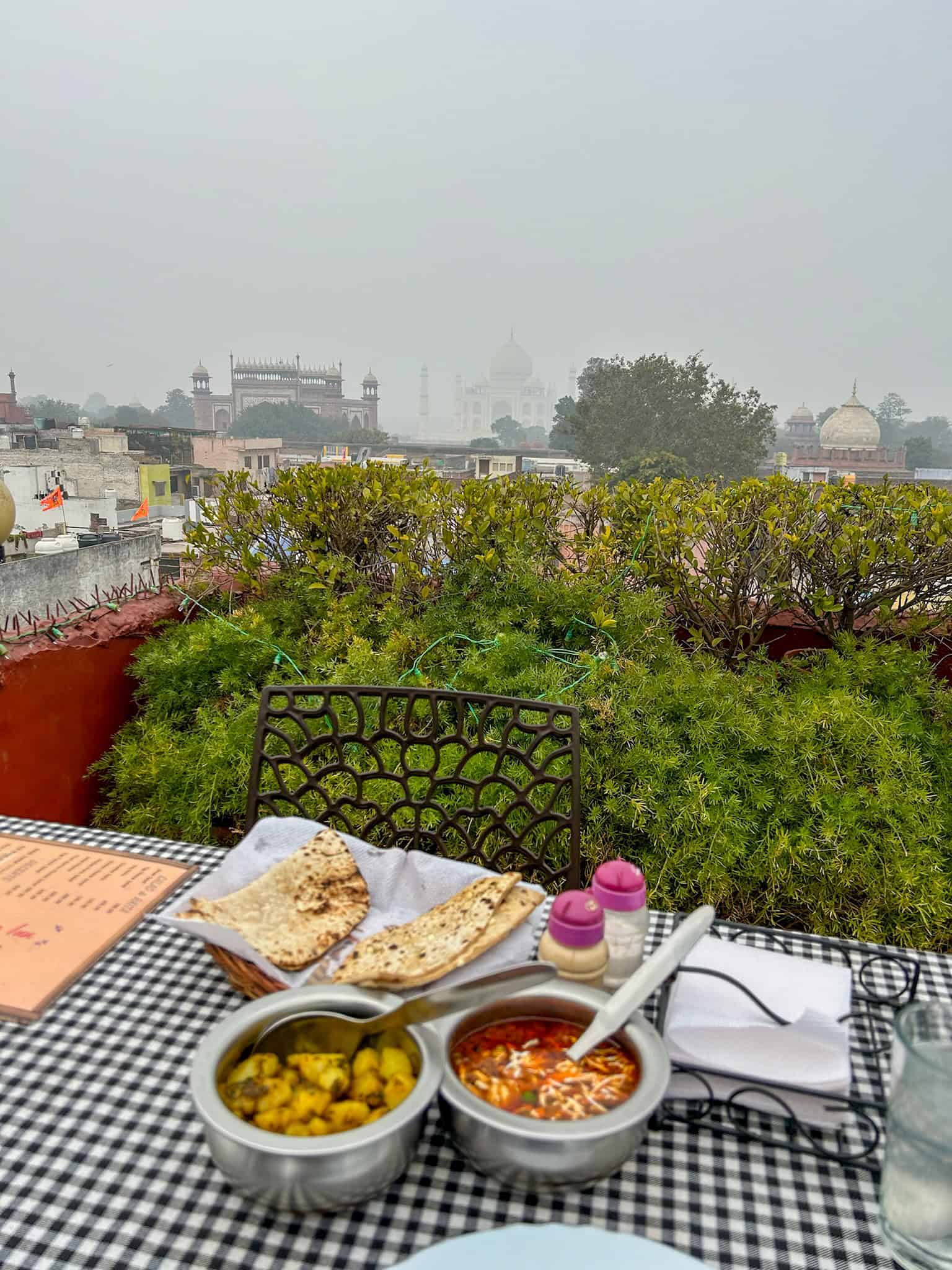
There are many restaurants in Agra, but it feels almost wrong not to add at least one meal with a view of the Taj to your Agra itinerary.
Hotel Saniya Palace may not look impressive from the outside, and even walking up the stairs, we had a ‘what are we doing here’ thought, but its rooftop terrace offers amazing, clear views of the Taj Mahal and surprisingly good food. We had a mattar paneer there that genuinely rivalled the best meals we’d had in Delhi and elsewhere in North India.
Watching the Taj at such a distance as the evening drew in while eating curry felt like a proper travel moment.
Where to Stay in Agra (Close to the Taj Mahal)
We stayed at Aman Homestay, just a short walk from the Taj Mahal’s main gate.
Staying close to the Taj makes sunrise visits far easier.
We loved the homestay experience as it felt like staying as a part of a family, as they were so helpful with tips to get the most out of our Agra stay.
They also gave us home-cooked food, a lovely communal meal one evening where we were able to chat with them and other guests, it felt like a mature hostel experience.
If you are planning two sunrise attempts (which we recommend in winter), staying nearby makes a big difference.
How Long to Spend in Agra?
One full day is technically enough to see the Taj Mahal and Agra Fort.
However, two nights is ideal, especially in winter. It allows flexibility for sunrise, avoids rushing, and makes the experience far more relaxed.
Agra Travel FAQs
Is Agra safe for female travellers?
Yes, but it is busy and can feel intense. Staying in tourist-friendly areas and using trusted transport makes the experience smoother.
You can read our guide on How to Stay Safe in India as a Female Traveller for more helpful tips.
Is one day enough for Agra?
Yes, for most travellers. One full day allows you to see the Taj Mahal and Agra Fort comfortably.
Is Agra worth visiting if I’ve already seen other Indian cities?
Yes. The Taj Mahal is unlike anything else in India and remains a truly unique experience.
Is the Taj Mahal closed on certain days?
Yes. The Taj Mahal is closed every Friday for prayers. It is open from sunrise to sunset on all other days.
Should you hire a driver or take the train to Agra?
From Delhi, both options work well. We took a train, and it was efficient and affordable, while a private driver offers flexibility and comfort.
If continuing to Jaipur and planning to stop at Fatehpur Sikri, hiring a driver can make the journey much smoother.
Agra Itinerary Conclusion
Agra is not a city you visit for its atmosphere or charm. It is loud, crowded, and at times exhausting. But it is also home to one of the most beautiful buildings in the world and a fortress steeped in history and intrigue.
When approached with realistic expectations and a clear plan, Agra becomes a meaningful and rewarding stop. Whether you stay for one day or two, the Taj Mahal alone makes the journey worthwhile.
As part of a Golden Triangle itinerary or a wider North India trip, Agra earns its place, not because of the city itself, but because of the extraordinary history it holds.